Add water, improve venting, and use bio treatments to stop tank odors fast. I’ve spent years fixing odor problems on RVs and boats. In this guide, I’ll show you how to eliminate holding tank odors with a simple plan that works in real life. You’ll learn the science, the steps, the gear, and the habits that keep tanks fresh. If you want a clear, proven path on how to eliminate holding tank odors, you’re in the right place.
What Causes Holding Tank Odors
To learn how to eliminate holding tank odors, start by knowing the cause. Odors come from bacteria that work without oxygen. They make hydrogen sulfide, ammonia, and mercaptans. That rotten egg smell? It’s hydrogen sulfide.
Heat, low water, and poor venting make smells worse. Black tanks smell from waste. Gray tanks smell from grease, soap, and biofilm. A blocked vent, dry toilet seal, or leaky hose can spread smells inside. I’ve traced “mystery odors” many times to a dry P-trap or a sagging vent line. Fix those first.
Quick Diagnosis: Find the Source Fast
Here’s how to eliminate holding tank odors by finding the real cause first.
- Check the toilet seal. If the bowl won’t hold water, the seal leaks smell. Add water. Lube the seal with silicone.
- Sniff the roof vent. If the smell is strong up there, venting works. If not, the vent may be blocked.
- Test the gray side. Run water in sinks. If the smell grows, the gray tank is part of it.
- Inspect traps and vents. Dry P-traps let gas pass. Refill them. Check for wasp nests in roof vents.
- For boats, test hose permeation. Warm a rag on a hose for a minute. Smell the rag. If it stinks, the hose is permeated and needs replacement.
A few minutes here saves hours later.
The 24-Hour Odor Elimination Plan
If you need to know how to eliminate holding tank odors today, use this plan.
- Dump in order. Black first. Then gray to rinse the hose.
- Backflush or rinse. Use a tank rinser or flush wand until water runs clear.
- Add water. After dumping, add 2 to 5 gallons to the black tank. Water is your best deodorizer.
- Dose smart. Use a bio-enzymatic or nitrifying treatment. Follow the label for tank size.
- Drive or run the boat. Let the mix slosh for 20 to 30 minutes.
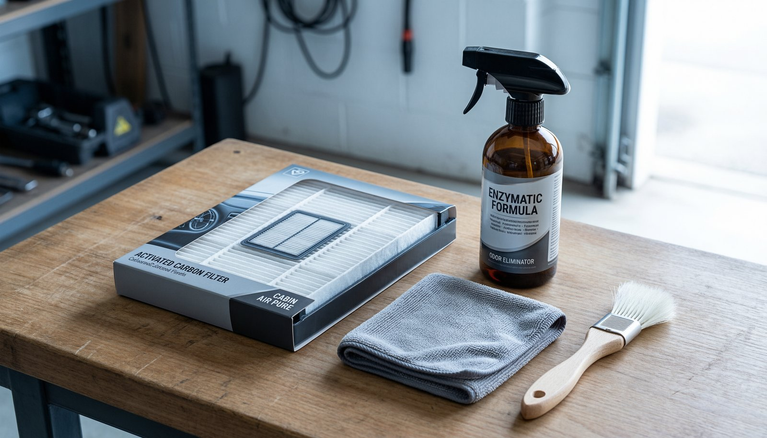
- Vent check. Make sure the vent line is open. Replace a clogged charcoal filter if needed.
- Treat the gray tank. Rinse with hot water. Add an enzyme degreaser or gray tank treatment.
- Seal and lube. Keep water in the toilet bowl. Lube seals with silicone-safe lube.
- Overnight rest. Let the treatment work. Dump again the next day if needed.
Safety note: Never mix bleach with ammonia or vinegar. Keep the area ventilated.
Best Treatments: Bio, Oxygen, and What To Avoid
If you ask how to eliminate holding tank odors for the long haul, pick the right chemistry.
Bio and enzyme treatments
- Add good bacteria that like oxygen. They outcompete the stink makers.
- Enzymes help break down waste and paper. This helps sensors too.
- These work best with water and air flow.
Oxygen or nitrate boosters
- Oxygen sources and nitrates cut hydrogen sulfide by changing the chemistry.
- These boost “sweet” bacteria and reduce rotten egg gas.
What to avoid
- Formaldehyde products. They can be restricted and harm septic sites.
- Heavy bleach use. It kills good bugs and can damage seals and hoses.
- Strong perfumes. They mask, not fix. They often fail in heat.
I’ve tested many blends on hot summer trips. Bio and oxygen beats perfume every time.
Venting And Airflow Upgrades
Good venting is key in how to eliminate holding tank odors. A healthy tank needs oxygen. That means clear, straight vent lines.
- Check the vent line size and run. Avoid sags that trap liquid.
- Replace clogged screens. Insects love roof vents.
- Use an activated carbon vent filter. Change it each season or when smells return.
- Add an airflow cap that pulls air while moving. Many RV caps and marine cowls do this.
- Boats: keep the vent line short and high. Avoid loops that trap waste.
More air equals less stink. Think of it like fresh air for your tank.
Deep Cleaning And Sanitizing Schedule
A clean tank is easier to keep fresh. Here’s a safe schedule.
- Monthly deep rinse. Backflush until clear. Add warm water and drive to slosh.
- Sensor clean. Use a sensor-safe cleaner. Avoid harsh grit. Ice does little.
- Shock sanitize, rarely. If you must, use 1/4 cup of unscented 6% bleach per 10 gallons of water. Let sit for 2 hours. Vent well. Rinse many times. Do not mix with other chemicals.
- Safer option. Use oxygen-based cleaners designed for tanks.
- Seal care. Keep the bowl wet. Use silicone-safe lube on seals. Replace worn parts.
Keep a simple log. You’ll spot patterns before smells come back.
Gray Tank Odor Fixes
Many folks ask how to eliminate holding tank odors, then discover the gray tank is the culprit. It builds slime and grease.
- Hot water rinse. Fill to one-third with hot water. Add enzyme degreaser. Drive or sail to slosh.
- Strainers. Catch food and hair before they rot.
- P-traps. Top them up. Dry traps let gas in.
- Vent lines. Keep them clear. Replace aged hoses.
- Dose after dumps. A small enzyme dose helps prevent biofilm.
Treat gray like a kitchen drain on wheels. Clean and vent it.
Boat-Specific Tips That Work
On boats, saltwater and hose permeation add extra pain. Here’s how to eliminate holding tank odors afloat.
- Use sanitation-grade hose. If it smells outside, the hose may be permeated. Replace it.
- Freshwater flush helps. Saltwater grows odor fast. A small freshwater flush line reduces smell.
- Service the joker valve. A worn valve leaks odor and backflow.
- Pump-out routine. Rinse, then pump again. Add treatment and water before docking.
- Vent height. Use a proper cowl vent. Keep the line dry and short.
On my 34-foot sloop, a new vent run and hose cut odors by 90% in a day.
RV-Specific Tips That Stick
RV tanks need water, airflow, and routine. Here’s how to eliminate holding tank odors on the road.
- Never leave the black valve open at a site. You’ll get a “pyramid plug.”
- Use more water. Hold the pedal longer when flushing.
- After dumping, add 2 to 5 gallons and a treatment.
- Use a tank rinser. Roof sprayers or wand tools do wonders.
- Roof vents. Add a rotating or vacuum-draw cap for better airflow.
In my Class C, a new vent cap and more water fixed mid-summer stink fast.
Prevention Checklist And Daily Habits
If you want to know how to eliminate holding tank odors for good, build habits.
- Water first. More water per flush. Always start with a wet tank.
- Vent always. Keep vents clear. Replace carbon filters on time.
- Treat right. Use bio or oxygen products. Avoid harsh chemicals.
- Dump smart. Black first. Gray second. Rinse and repeat if needed.
- Heat plan. Park shade side if you can. Heat boosts smell.
- Paper choice. Use rapid-dissolve paper. Test in a jar before you buy big.
Small steps stack up. Think rinse, water, air, and bio.
Troubleshooting Stubborn Smells
When you still need help on how to eliminate holding tank odors, try these fixes.
Why do odors get worse while driving?
Air pressure changes can pull gas inside. Add a better vent cap and check P-traps.
Why does it smell only when flushing?
The bowl seal may leak. Keep water in the bowl and lube the seal.
Why does it smell near the kitchen?
That’s often the gray tank. Degrease it and refill P-traps.
Could the toilet or hose be cracked?
Yes. Dye-test with colored water. Look for leaks around seals and joints.
Are my sensors part of the odor issue?
Dirty sensors mean buildup. Clean them to boost rinse flow and waste breakdown.
Frequently Asked Questions of how to eliminate holding tank odors
What actually neutralizes the rotten egg smell?
Hydrogen sulfide causes the rotten egg odor. Aerobic bacteria, oxygen boosters, and good venting reduce it fast.
Is bleach safe in a holding tank?
Use it rarely and very diluted. It can harm seals and kill good bacteria, so rinse well and never mix with other cleaners.
How much water should I keep in the black tank?
After each dump, keep 2 to 5 gallons in the tank. Also keep water in the toilet bowl to seal out gas.
How often should I dump the tanks?
Dump when the tank is at least two-thirds full. This gives a strong flow that moves solids out.
Do charcoal vent filters really work?
Yes, they capture odor gases at the vent. Replace them each season or when smells return.
What’s the best treatment type for long trips?
Bio-enzymatic or nitrifying treatments work well over time. They need water and air to perform best.
Can vinegar help with odors?
It can help with mineral film and light smells in gray lines. Do not mix it with bleach, and rinse well after use.
Conclusion
Fresh tanks come from simple rules. Use water. Keep air moving. Feed the right bacteria. Keep seals, vents, and hoses in good shape. Now you know how to eliminate holding tank odors with habits and a plan that works every season.
Try the 24-hour plan on your next dump cycle. Keep notes for a week. If this helped, share your results, subscribe for more tips, or leave a question and I’ll help you dial in your setup.