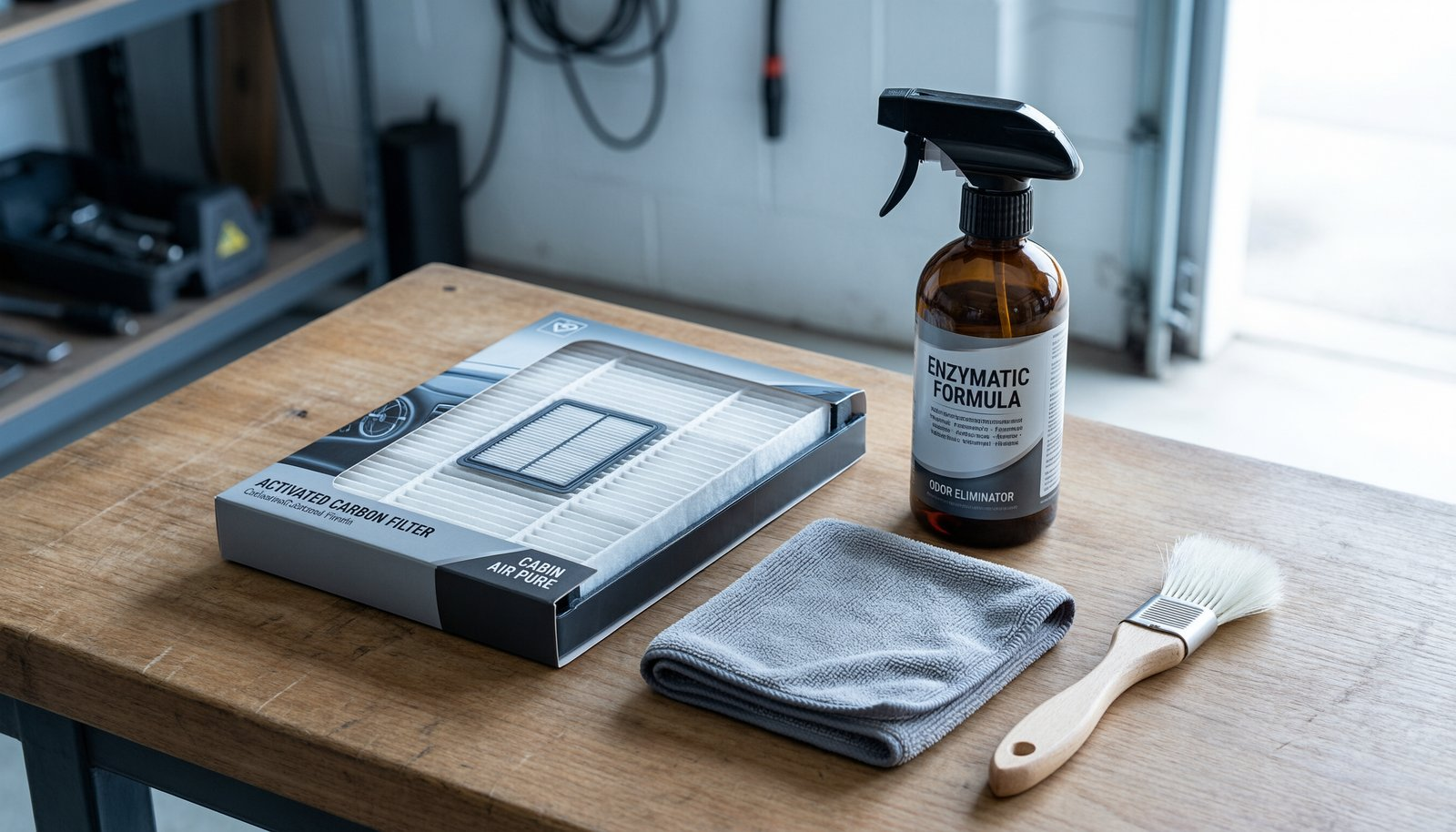
To clear tobacco smoke residue, you can get cigarette smell out of car vents in about 45 to 60 minutes by discarding the used cabin air filter and flushing the climate control ductwork with an enzymatic odor eliminator while running the fan on high. Surface cleaning alone fails because heavy smoke oils and chemical tars settle across the evaporator core and interior air passages.
10 Best Car Odor Eliminator: The Only Car Odor Eliminators That Actually Kill Bacteria
Supplies to get cigarette smell out of car vents
Gathering the correct tools beforehand keeps you from having to pause midway through the duct treatment. Standard aerosol fresheners only mask scents temporarily with perfumes, so you need items that break down stubborn organic tars.
- A fresh cabin air filter matched to your vehicle make, model, and production year (activated carbon versions work best)
- One can of dedicated automotive air conditioning duct cleaner or foaming evaporator core flush
- A bottle of concentrated enzymatic odor neutralizer
- Two or three clean microfiber towels
- A basic screwdriver set or trim removal tool (required for accessing the filter housing on certain vehicle models)
- A soft-bristle detailing brush or vent swab
- Safety glasses and nitrile gloves to protect your skin from cleaning sprays
How to Clean Cigarette Smoke Residue From Your Air Ducts
This process breaks down oily smoke films on the blower fan, deep ducts, and cabin filter housing. Work outside or in an open garage so fresh air circulates around the vehicle throughout the process.
- Remove the old cabin air filter. Open your glove compartment or remove the lower dashboard trim panel to expose the cabin filter cover. Unlatch the plastic clips, slide the dirty filter out, and throw it straight into an exterior trash bag so trapped particles don’t drift back into your vehicle interior.
- Vacuum and clean the empty filter compartment. Insert a narrow vacuum crevice attachment directly into the filter slot to lift out loose ash, pine needles, or dry debris. Spray a microfiber towel lightly with your odor neutralizer and wipe down the hard plastic walls inside the empty chamber to lift the yellow tar film that settles near the intake.
- Wipe down each dashboard vent grille. Dip a soft-bristle detailing brush or a clean microfiber cloth wrapped around a flat tool into your cleaner. Clean between every plastic louver on the center and side dashboard vents, pushing away the sticky brown film that collects on outer edges.
- Spray the foaming duct cleaner into the dash registers. Insert the long extension straw of your cleaner can directly into each dashboard vent until it stops. Depress the nozzle while drawing the straw outward slowly, allowing the expanding foam to coat the interior walls of your distribution tubes without overflowing onto your dashboard electronics.
- Park the vehicle outside and run the engine. Start your car, switch the climate control system to outside air intake (ensure the recirculation button stays off), open all four windows completely, set the temperature to cold, and turn the fan blower to maximum speed for 10 minutes. This blows air across the duct paths and through the vent openings to help expel the cleaner.
- Mist odor neutralizer directly into the exterior cowl intake. Stand outside near the base of your windshield where the plastic intake grilles sit beneath the wiper arms. With the blower still pushing outside air on high speed, spray 6 to 8 short bursts of liquid odor neutralizer into the exterior grilles so the blower draws the fine mist across the internal heater components.
- Switch the climate system to maximum heat. Turn your dashboard dials to full heat, switch the air direction to the floor vents, and let the vehicle idle with windows open for 10 minutes. The hot air dries remaining moisture inside the duct tubes and bakes out lingering chemical odors from the heater core.
- Slide your new cabin air filter into position. Turn off the engine and ignition. Insert the fresh filter into the housing, verifying that the airflow arrow printed on the filter frame matches the directional airflow marker on the plastic housing, then snap the access cover securely shut.
Tip: Keep a dry towel laid across your center console and navigation screen while spraying cleaners into vents so loose liquid can’t run down behind dashboard electronics.
How Long Does It Take for Smoke Odors to Clear?
Clearing cigarette odors takes between 45 minutes and five days. The exact time depends on how long smoking occurred inside the vehicle and whether the air conditioning was set to recirculation while cigarettes were lit.
| Treatment Level | Exposure History | Supplies Needed | Working Time | Complete Clearing Time |
|---|---|---|---|---|
| Light Refresh | 1 to 5 cigarettes smoked with windows open | Fresh carbon filter, intake mist spray | 20–30 minutes | 2 to 4 hours |
| Moderate Flush | 1 to 6 months of occasional smoking | New filter, foaming duct cleaner, cowl mist | 45–60 minutes | 24 hours |
| Heavy Restoration | Over 1 year of daily smoking inside cabin | New filter, two cans foam flush, ozone cycle | 2 to 3 hours | 3 to 5 days |
| Severe Tar Strip | Multi-year chain smoking with closed windows | New filter, full duct wash, upholstery extraction | 4 to 6 hours | 1 to 2 weeks |
The residual chemicals left behind by tobacco smoke, commonly referred to as thirdhand smoke, bind tightly to plastics and soft fibers inside your vehicle. As explained by the National Institute of Environmental Health Sciences, these resting chemical residues re-emit gases back into the air over time, which explains why a simple vent spray wears off if the source residue isn’t physically cleared from the heater passages.
Is It Safe to Spray Disinfectant Cleaners into Air Vents?
Spray specialized automotive coil cleaners into vents, but avoid household cleaners or bleach. Standard household chemicals often contain chlorine or harsh acids that attack the thin aluminum cooling fins on your evaporator core, leading to refrigerant leaks that require dashboard removal to repair.
Water-based household sprays can also puddle inside horizontal duct junctions or drip onto the electronic resistor module that controls your blower motor speeds. When moisture settles on sensitive automotive electronics, it creates short circuits or leaves damp pockets where biological mold grows alongside the existing tobacco smell.
Always pick automotive products marked specifically for air conditioning coils and ducts. If you want to use a home solution, mix a mild liquid dish soap with warm water on a damp microfiber cloth to clean accessible exterior vent grilles, leaving the deep internal duct chambers to cleaners designed to evaporate cleanly.
Why Replacing the Cabin Air Filter Matters First
Putting off a filter swap renders any spray treatment useless within days.
Whenever you switch on the fan, air pulls through this saturated paper barrier before it ever reaches your face. If an old, smoke-soaked filter stays inside the housing, it acts like a scent diffuser, re-contaminating clean duct surfaces every single minute the blower runs.
Troubleshooting Lingering Vent Odors
Even after a thorough duct flush, stubborn smells can persist if certain hidden components hold onto nicotine deposits.
Why Does the Smoke Smell Return When the AC Turns On?
This issue happens when tobacco residue is stuck to the wet surface of the air conditioning evaporator core. When the air conditioner runs, water vapor condenses on this cold metal core, dissolving dried nicotine and blowing the sharp odor right through your cabin vents; cleaning the core directly through the blower motor housing with an expanding evaporator foam resolves the problem.
Why Does the Vent Smell Worse When Using the Heater?
The heater core operates at much higher temperatures than the surrounding ductwork, reaching around 180°F when the engine warms up. This heat warms dried tobacco oils that settled on the heater core casing, vaporizing the tar and pushing a strong, stale smell through the floor and defrost registers until the heater core exterior is thoroughly flushed.
Why Does the Smell Linger Even After Replacing the Filter?
If the smell continues after a filter swap and duct treatment, the cabin air fan wheel itself is likely coated in a layer of sticky yellow residue. Smoke particles stick to the curved plastic blades of the squirrel-cage blower fan, requiring you to drop the blower motor from underneath the passenger dashboard and wipe each individual blade with an all-purpose cleaner.
Mistakes That Ruin Vent Cleaning Results
Small errors during the cleaning process can reduce the effectiveness of your work or cause expensive electrical issues behind the dashboard.
- Leaving the AC on recirculation mode during the cleaning process: Recirculation closes the fresh air door, preventing cleaning agents from drawing across the entire length of the intake duct system and trapping moisture in the car.
- Drenching vents with liquid spray bottles: Squirting liquid directly into dashboard grilles instead of using light, dry expanding foam lets runoff drip onto delicate audio, climate, and navigation wiring harnesses.
- Skipping the headliner cleaning: Smoke naturally rises and settles into the fabric headliner directly above the driver seat, allowing odors to drop back down into the vent stream even when your ducts are spotless.
- Installing the fresh filter before running the duct flush: Running chemical cleaners with the new filter already installed clogs the fresh carbon media with loosened dirt, ruining the replacement before you ever drive the vehicle.
Choosing Between DIY Cleaning and Professional Help
Deciding whether to handle duct cleaning yourself or hire an automotive detailer depends on how deeply the smoke residue has penetrated your car’s climate system.
Handle the job yourself if the car smells mildly of smoke, if smoking occurred only with windows lowered, or if the smell only appears occasionally when running the fan.
Call an automotive detailer or repair shop if the plastic inside the vents feels visibly sticky to the touch, if cleaning the ducts produces no improvement after two attempts, or if nicotine has turned interior glass permanently hazy. Professional shops use high-output ozone generators in controlled environments and commercial dry-steam extraction tools that push 200-degree steam through the deep ventilation system, reaching tight bends you can’t access from the front panels.
Tip: If you try using an ozone generator yourself, never stay inside the vehicle, make sure to air out the cabin for at least 45 minutes afterward, and remove all pets and plants beforehand.
Caring for Your Vents After Cleaning
Once your vents run clean and clear, taking a few small steps keeps stale odors from settling back into the interior plastic.
Run your blower fan with the air conditioning switched off shortly before ending your drive.
Replace your cabin air filter every 12,000 miles or at least once per year if you regularly carry passengers who smoke. Keeping a small, natural bamboo charcoal odor-absorbing bag tucked under the front passenger seat provides continuous, passive odor control without releasing artificial fragrances that irritate your lungs.
Frequently Asked Questions
Can I spray Lysol into my car vents to kill smoke smell?
No, you should avoid spraying Lysol into car vents because the alcohol-based formula can dry out plastic seals, create an overpowering chemical mix with stale smoke, and potentially ignite if sprayed near the electrical blower motor resistor while the vehicle ignition is running.
Will an ozone machine remove cigarette smell from air ducts?
Yes, an ozone machine removes smoke odors by oxidizing organic molecules trapped deep inside the air ducts. You must run the vehicle with the fan on low recirculation for 20 to 30 minutes, followed by a full 45-minute airing-out period before driving.
Does baking soda in the vents help with smoke odor?
No, you should never pour or blow dry baking soda directly into car vents because the fine powder cakes against damp evaporator coils, clogging condensation drain lines and creating clumping paste that restricts airflow and damages your climate control system.
How do I know if my car has a cabin air filter?
You can confirm if your car has a cabin air filter by checking the maintenance section of your owner’s manual or looking behind the glovebox for a rectangular access door with release tabs, though some older models built before the early 2000s lack them entirely.
Will leaving windows open get smoke smell out of car vents?
No, leaving windows open won’t remove smoke smell from vents because ambient airflow can’t reach the interior ductwork, evaporator core, or cabin filter; fresh air only circulates through the main cabin while the tar residue stays stuck inside the ventilation tubes.
Can vinegar remove cigarette smell from car vents?
Yes, placing a bowl of white vinegar on the car floorboard overnight can absorb ambient odors, but misting vinegar directly into duct vents isn’t recommended because the acidic liquid can corrode aluminum parts and leave a strong, sour scent behind.
Place a natural charcoal bag beneath your passenger seat, verify your climate drain tube under the car drips water freely during warm days, and replace your cabin air filter ahead of schedule if you notice stale airflow returning to the cabin.