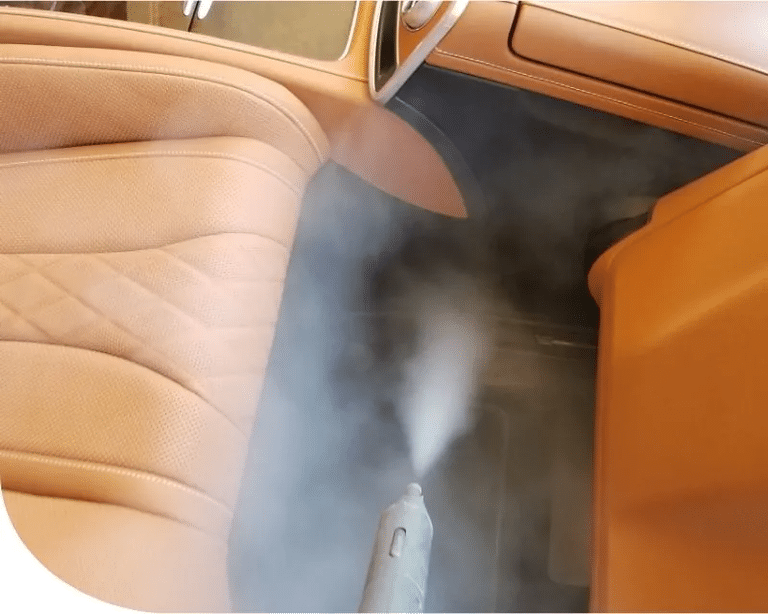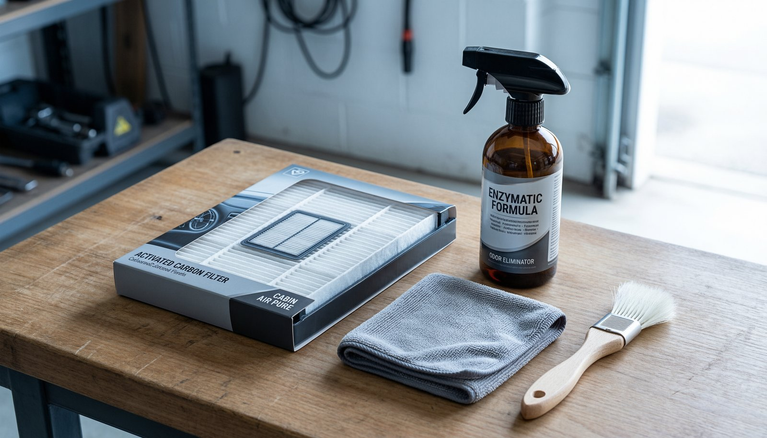
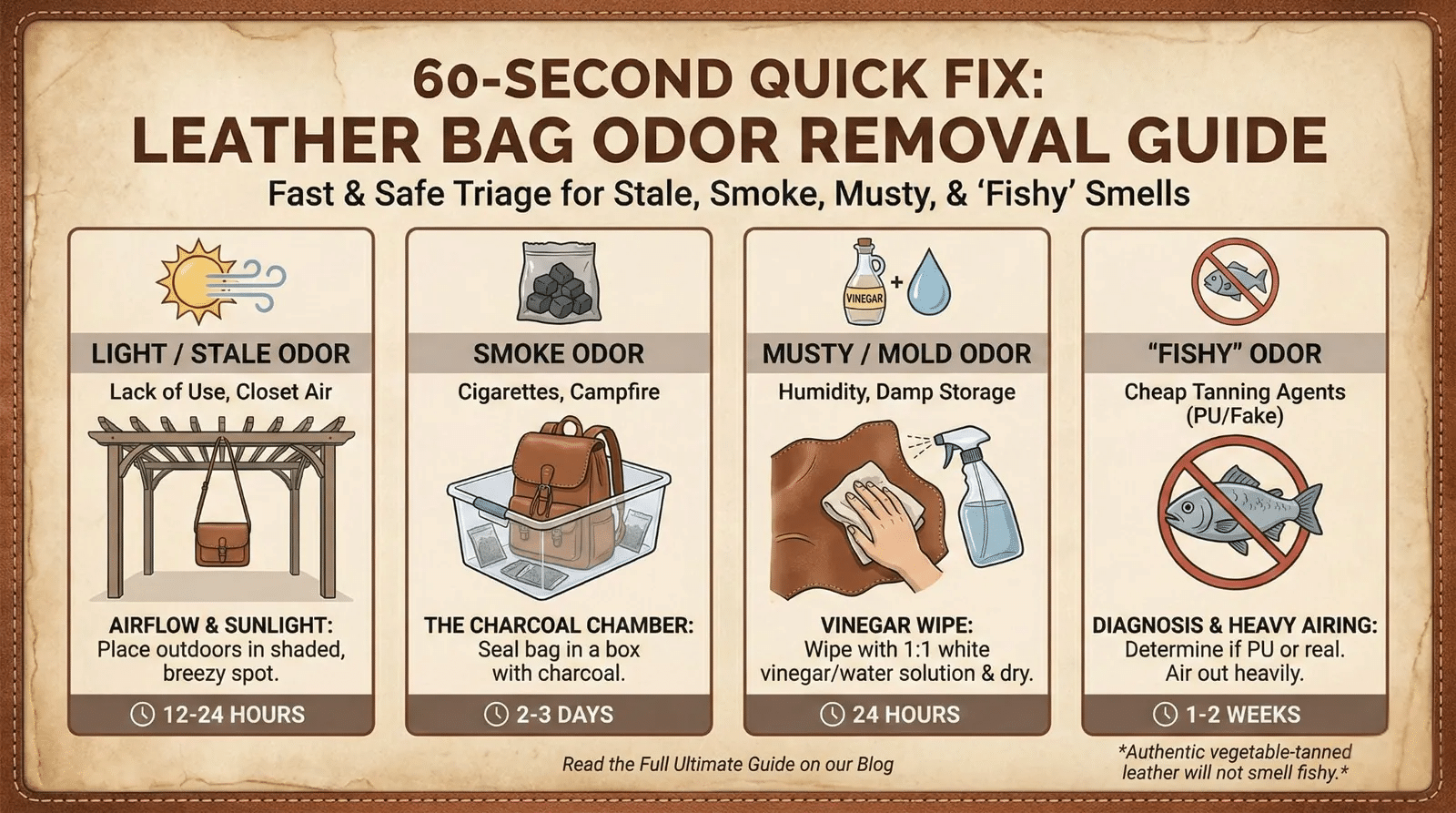
Removing smoke smell from leather requires absorbing trapped particles with baking soda or activated charcoal for 48 to 72 hours inside a sealed container. This method safely lifts odors without damaging the hide’s natural oils or finish.
The exact time needed depends on how deeply the smoke penetrated and whether the item was sealed or porous. Surface smells clear faster, while saturated items need repeated treatments and proper ventilation to fully recover.
Who needs leather smoke odor removal
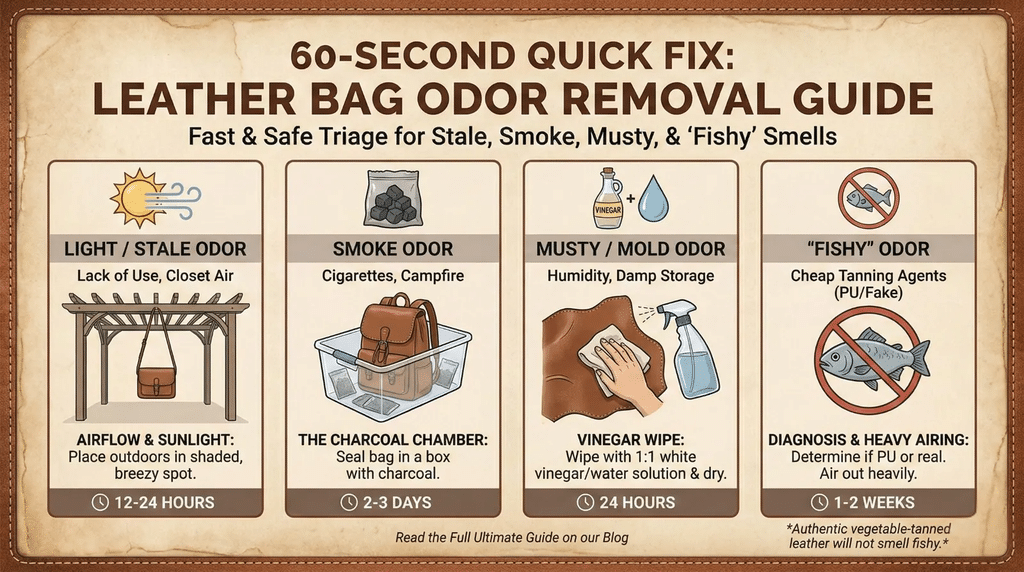
Homeowners dealing with cigarette residue or post-fire cleanup usually search for this solution first. They typically have furniture or jackets that absorbed smoke over months and need safe methods that won’t strip color or crack the material.
Collectors restoring vintage pieces face different challenges because older finishes are more fragile. They need gentle absorption rather than aggressive cleaning agents that might dissolve original patina or cause irreversible staining on delicate hides.
This guide serves those treating household items with standard commercial or vegetable-tanned leather. If your piece is antique, museum-grade, or has unknown provenance, consult a professional conservator instead. The steps here assume modern, stable finishes that can tolerate dry absorption methods without structural damage.
Factors affecting odor removal success
Leather porosity determines how deeply smoke particles embed and how long extraction takes. Aniline-dyed hides absorb odors faster but release them slower than pigmented or coated varieties because their open pores trap particulates deeper within the fiber structure.
Exposure duration directly correlates with treatment cycles needed. Items near daily smoking for years require three to five absorption rounds, while those briefly exposed to campfire smoke often clear in one 72-hour session with adequate airflow between treatments.
Finish type dictates which methods are safe.
High ambient humidity above 60% reduces the effectiveness of absorbents like activated charcoal and baking soda because they preferentially adsorb water vapor; maintaining 40-50% relative humidity helps preserve absorbent capacity.
Item construction complexity adds hidden reservoirs. Stitching channels, foam padding, and lining fabrics retain smoke independently of the outer hide, meaning surface treatment alone fails unless internal cavities receive direct access through zippers, seams, or removable components.
Step-by-step leather smoke treatment
- Vacuum the entire surface using a soft brush attachment at low suction to remove loose ash and soot before any contact treatment begins.
- Test your chosen absorbent on a hidden area for 24 hours to confirm no discoloration or texture change occurs on that specific finish.
- Place the item inside a large plastic bin or garment bag with an open bowl containing two cups of baking soda or activated charcoal.
- Seal the container completely with tape or clips, ensuring no air exchange happens during the 48 to 72-hour absorption window.
- Remove the item and air it outdoors in shade for four hours, checking if the odor has reduced to acceptable levels before repeating.
- Wipe surfaces with a barely damp microfiber cloth to lift any residual powder, then condition with a pH-neutral leather cream.
- Repeat the sealed absorption cycle up to three times if odor persists, allowing 24 hours of rest between each treatment round.
- Inspect stitching and lining separately, as these areas may need targeted spot treatment with cotton swabs dipped in diluted white vinegar.
The critical judgment call is knowing when absorption has reached its limit. If three full cycles produce no noticeable improvement, remaining odor likely resides in non-leather components requiring professional disassembly or replacement rather than continued home treatment attempts.
Treatment options by situation
Different smoke sources and leather conditions require adjusted approaches to avoid damage while maximizing effectiveness.
| Situation | Recommended method | Time investment | Key precaution |
|---|---|---|---|
| Fresh cigarette smoke | Baking soda in sealed bin | 48 hours per cycle | Avoid wetting surface |
| Old tobacco buildup | Activated charcoal plus airing | 3-5 cycles over weeks | Check finish stability first |
| Campfire exposure | Ventilation plus light wipe | 24-48 hours total | Test for soot staining |
| Kitchen grease smoke | Cornstarch absorption overnight | 12 hours per application | Blot, never rub grease |
| Moldy smoke combo | Professional assessment required | Varies by severity | Don’t treat at home |
| Lined jacket interior | Charcoal sachets inside sleeves | 72 hours minimum | Keep sachets off lining |
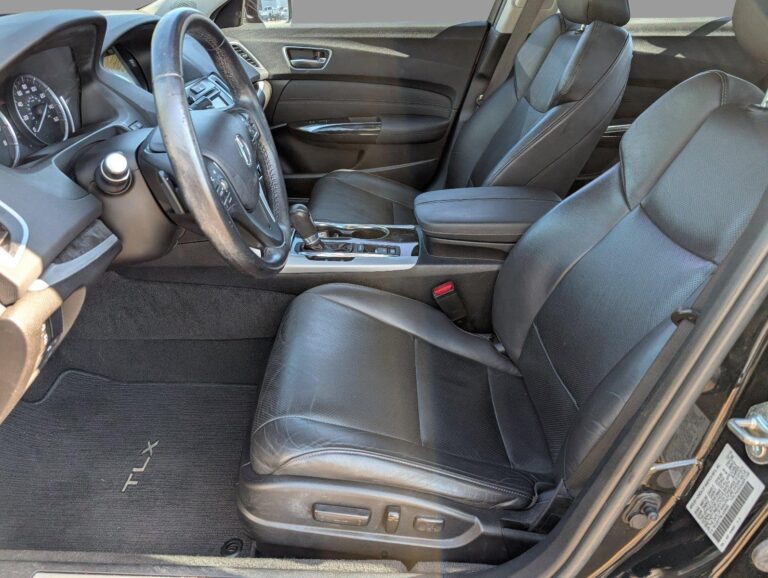
| Car seat saturation | Ozone generator by specialist | Single 2-hour session | Never DIY ozone indoors |
Details that protect leather quality
Preparation prevents permanent damage
Testing absorbents on inconspicuous areas catches incompatible reactions before visible damage occurs. Some dyes bleed when exposed to alkaline powders like baking soda, leaving white marks that no amount of conditioning can reverse once set.
Cleaning surface debris first stops abrasive particles from grinding into grain during handling. Soot contains carbon compounds that permanently stain when pressed against damp or warm leather, so dry vacuuming must always precede any contact-based treatment step.
Monitoring avoids overtreatment
Checking progress every 24 hours prevents unnecessary repetition that dries out fibers. Leather loses flexibility when repeatedly subjected to absorption cycles without adequate reconditioning intervals between treatments, leading to premature cracking along stress points.
Documenting odor intensity on a simple scale creates objective records. Subjective impressions shift with fatigue and expectation, but written notes taken at consistent times reveal actual trends versus wishful thinking that extends ineffective treatments beyond their useful endpoint.
The 6 Best Smoke Smell Removers for Leather That Actually Work
Common problems and solutions
Matching symptoms to causes prevents wasted effort on wrong fixes during treatment.
| What you notice | What it usually means | What to do first | How to stop it happening again |
|---|---|---|---|
| White powdery residue | Absorbent transferred to surface | Vacuum gently with brush tool | Use breathable fabric barrier next time |
| Stiffness after treatment | Moisture loss from repeated cycles | Apply pH-neutral conditioner immediately | Space treatments 48 hours apart |
| Odor returns after days | Internal padding still saturated | Insert charcoal sachets into cavities | Treat lining separately from exterior |
| Dark spots appearing | Liquid cleaner reacted with dye | Stop all wet methods immediately | Stick to dry absorption only |
| No improvement after cycles | Smoke source wasn’t leather | Identify other room materials | Test non-leather items individually |
| Sticky surface feel | Conditioner applied too heavily | Wipe excess with dry cloth | Use half the recommended product amount |
| Color fading unevenly | Sun exposure during airing phase | Move to shaded ventilation area | Never place treated items in direct sunlight |
Safety and material guidelines
The EPA recommends avoiding ozone generators in occupied spaces due to respiratory irritation risks, reserving such equipment for certified professionals with proper monitoring gear. Home users should stick to passive absorption methods that carry no inhalation hazard during extended treatment periods.
Never use bleach, ammonia, or undiluted vinegar on leather, as these strip protective coatings and alter pH balance irreversibly. Always verify cleaner compatibility on the manufacturer’s care label or through direct inquiry before applying any liquid solution to finished hides.
Proper ventilation during airing phases prevents concentrated odor rebound in enclosed rooms. Open windows or run exhaust fans to maintain air exchange rates sufficient for carrying away released particles rather than allowing them to resettle on nearby surfaces.
If mold accompanies smoke damage, stop immediately and contact remediation specialists. Disturbing fungal colonies releases spores that pose health risks exceeding typical DIY safety margins, requiring containment protocols unavailable in residential settings.
Real costs of odor removal
Time investment ranges from 48 hours for light exposure to several weeks for deep saturation, with active work totaling perhaps two hours across multiple cycles. Most of this duration is passive waiting, but scheduling around treatment windows disrupts normal item usage significantly.
Material costs for baking soda or charcoal and basic supplies are inexpensive relative to professional restoration, which runs hundreds depending on item size and contamination level, making DIY worthwhile only when sentimental value justifies the labor and uncertainty involved.
Hidden expenses include replacement conditioning products consumed during recovery and potential refinishing if testing reveals finish instability. Factor these possibilities into your decision before starting, as abandoned mid-treatment items often end up worse than untreated ones due to partial product interactions.
Energy costs for dehumidifiers or fans running continuously during treatment add modestly to utility bills. Calculate based on your local rate and expected runtime to understand true operational expense beyond visible supply purchases.
Maintaining results after treatment
Store treated items in climate-controlled environments below 55% relative humidity to prevent odor reabsorption from damp air. Basements and attics fluctuate too widely for safe long-term storage of freshly cleaned leather goods.
Use breathable cotton dust covers instead of plastic bags that trap moisture and encourage microbial growth. Cedar blocks or lavender sachets provide mild ongoing protection without chemical transfer risks associated with synthetic fresheners placed directly against hide surfaces.
Condition quarterly with products matching your leather type to maintain fiber flexibility and barrier function. Dry leather absorbs environmental odors faster than well-maintained surfaces, making preventive care more efficient than repeated corrective treatments over the item’s lifespan.
Monitor stored items monthly for early signs of odor return or mold development. Catching problems within days allows simple re-aeration, while neglect stretching to months often necessitates starting the entire multi-cycle process again from scratch.
When DIY smoke removal fails
Antique or historically significant pieces require professional conservation assessment before any home treatment attempt. Amateur methods risk destroying irreplaceable patina and reducing monetary value far more than the cost of expert intervention would have been initially.
Items with active mold growth need remediation specialists equipped with containment and filtration systems. Disturbing colonies without proper protection spreads spores throughout your home and exposes you to respiratory hazards that ordinary masks can’t adequately filter during cleanup.
Persistent odors surviving three complete absorption cycles indicate contamination beyond leather itself. Foam cushioning, wooden frames, or metal hardware may be the actual reservoirs, requiring disassembly or replacement that exceeds typical homeowner tools and expertise safely.
Frequently asked questions
Can I use vinegar on leather?
Yes, but only diluted 1:10 with distilled water and tested first. Undiluted vinegar damages finishes and alters pH permanently. It works best for surface residue after smoke exposure, not deep odor absorption where dry methods remain safer and more effective overall.
Why does the smell come back?
Returning odor means internal components weren’t fully treated. Foam, lining, or stitching channels retain particles independently of outer leather. Address these separately with inserted sachets or professional cleaning, as surface-only treatment can’t reach embedded contamination sources hiding beneath visible layers.
How long does baking soda take?
Baking soda requires 48 to 72 hours per sealed cycle for measurable results. Lighter exposure clears in one round; heavy saturation needs three to five cycles spaced 24 hours apart. Rushing this timeline reduces effectiveness and wastes effort on incomplete absorption attempts.
Is sunlight safe for airing?
No, direct UV exposure fades dye and dries fibers rapidly. Air items in complete shade with good airflow instead. Sunlight accelerates degradation without improving odor removal, causing cosmetic damage that outweighs any marginal benefit from heat-assisted particle release during ventilation phases.
Does activated charcoal work better?
Activated charcoal has higher surface area than baking soda, making it more effective for stubborn odors. However, it costs more and requires careful handling to avoid black dust transfer. Choose charcoal for persistent cases after baking soda proves insufficient for your specific contamination level.
Can I speed up the process?
Not safely. Accelerating absorption through heat or moisture risks permanent leather damage. Patience is the only reliable variable; each cycle needs full duration for particle transfer equilibrium. Shortcuts consistently produce inferior results requiring additional corrective treatments later anyway.
Will conditioning mask the smell?
Conditioners temporarily reduce perceived odor by coating surfaces, but don’t remove trapped particles. The smell returns as product wears off within days. Use conditioning only after successful odor removal to restore suppleness, never as a substitute for actual absorption treatment cycles.
Next steps for smoke-free leather
Begin with a single 48-hour baking soda test cycle on your least valuable item to establish baseline response. Expect noticeable reduction rather than complete elimination after this first attempt, which confirms whether further investment is justified for remaining pieces.
Stop and seek professional help if no improvement appears after three full cycles or if mold becomes visible at any stage. Continuing beyond this point rarely yields better results and increases the risk of irreversible damage to items you hoped to save.