A harsh, sharp odor from an engine usually points to intense friction or hot motor fluid dripping directly onto scorching metal parts. Drivers dealing with a car that smells like burning rubber are almost always reacting to a slipping drive belt, a dragging brake caliper, an oil leak running down onto the exhaust manifold, or a plastic shopping bag stuck to the catalytic converter. In rare cases, severe electrical shorts can melt rubberized wire sheathing beneath the dashboard.
Most Likely Causes for the Burning Rubber Odor
The burning odor comes from friction, escaping heat, or burning fluids touching surfaces that run hotter than a kitchen griddle. These causes are ranked from most common to rarest.
- Loose or slipping accessory drive belt: If an alternator, air conditioning compressor, or power steering pump begins to seize, the rubber serpentine belt continues dragging across the stationary pulley. That heavy friction rapidly scorches the belt’s ribbed rubber backing, sending an acrid, chemical stench through your cabin ventilation ducts within minutes. Turn off the climate controls immediately and pull over safely to inspect the belt for glazing, cracking, or shredding along its outer edges.
- Engine oil leaking onto hot exhaust pipes: Motor oil contains thick hydrocarbons that release a pungent odor resembling charred rubber whenever they drip onto scorching exhaust components. A weeping valve cover gasket lets oil run slowly down the back or side of the engine block directly onto the exhaust manifold. You’ll need to look near the top seams of the motor with a flashlight to spot dirty, dark wetness collecting on the hot metal tubes.
- Road debris or shopping bags melted to the exhaust: Lightweight plastic grocery bags floating across roadways easily catch against hot exhaust pipes, mufflers, or the catalytic converter running underneath your vehicle. The plastic melts instantly against temperatures exceeding hundreds of degrees, bonding to the metal and giving off a choking, burnt odor that mimics scorched tire tread. Look underneath the vehicle after it completely cools to check for thin, crusty films stuck to the exhaust plumbing.
- Stuck brake caliper or forgotten parking brake: A brake caliper slide pin that corrodes or seizes keeps the brake pad clamped firmly against the spinning metal brake rotor while you cruise along. The constant rubbing generates extreme heat that fries the organic binder resins in the brake pads and scorches the rubber dust boots on the caliper. Walk around the vehicle immediately after parking and place your hand near (not on) each wheel hub to see if one corner feels like an open oven.
- Worn or slipping manual transmission clutch: In manual vehicles, resting your foot heavily on the clutch pedal or pushing up steep hills with a heavy trailer causes the friction disc to slip against the flywheel. The friction material is full of heavy resins that smell almost identical to burnt industrial tires when severely overheated. Back off the throttle, downshift cleanly without riding the pedal, and let the drivetrain cool down over several miles of flat, steady driving.
- Coolant dripping onto hot engine surfaces: Antifreeze smells sweet when it first escapes, but once it boils away violently against a boiling cylinder head or manifold, the smell turns bitter and scorched. A leaking radiator hose clamp or hairline split in a bypass line can spray pressurized mist across hot steel. Check your coolant recovery tank level against the molded plastic fill line once the radiator is entirely cold to the touch.
- Overheating wiring harness or melting insulation: When an aftermarket stereo, trailering plug, or grounded electrical wire carries far more current than its gauge permits, the protective rubber or vinyl casing bubbles and smolders. This failure produces a sharp electrical stench alongside the rubber aroma and often causes dashboard lights to flicker or fuses to blow. Shut off your electrical accessories, disconnect mobile device chargers, and look under the dash for dangling, scorched wire jackets.
| Symptom You Notice | Most Likely Cause | Immediate Action to Take |
|---|---|---|
| High-pitched squeal under the hood followed by a sudden rubber stench | Slipping or misaligned serpentine drive belt | Turn off the A/C, idle the engine, and check the front accessory pulleys for binding. |
| Strong odor outside the car near one front or rear wheel, plus intense heat | Seized brake caliper or engaged parking brake | Disengage the emergency brake; inspect wheel rims for dark, heavy brake dust coating. |
| Burning odor accompanied by wisps of pale smoke rising from beneath the hood | Motor oil dripping from the valve cover onto the exhaust | Stop driving, shut off the ignition, and check the engine oil dipstick level. |
| Odor appears only after driving at highway speeds; nothing leaking under hood | Plastic film or road garbage welded to the exhaust system | Allow the undercarriage to cool completely, then inspect the pipe path with a work light. |
| Bitter, scorched odor paired with a greasy film collecting inside the windshield | Leaking heater core or hot coolant blowing through vents | Monitor engine operating temperature gauge and check reservoir fluid levels. |
| Acrid odor with sudden interior accessory failures or blown circuit fuses | Shorted wire harness or melting terminal connector | Shut off all cabin electronics, park safely, and disconnect the negative battery terminal. |
Safety: Inside a mains-powered machine, the parts behind the outer cover can hold a dangerous electrical charge even after it has been unplugged — that’s why they sit behind a cover. Opening the housing, or testing or replacing anything behind it, is a job for a qualified technician, never a home repair.
5 Best Natural Car Odor Eliminators: Top Picks Reviewed & Tested
Quick Checks You Can Do Safely at Home
Diagnosing car odors doesn’t require tearing apart the engine or using specialty shop equipment. You can identify the vast majority of problems using your eyes, a pocket flashlight, and basic hand awareness.
Make sure the car is parked on solid, level ground with the transmission in park (or reverse for manuals) and the ignition turned completely off.
1. Perform a Walk-Around Wheel Check
Start by checking your braking system, which generates immense heat when parts hang up. Walk around the exterior of your car right after a drive, stopping at all four wheels.
Hover your hand near the hub and wheel spokes without touching the metal. If a brake caliper is sticking, you’ll feel radiant heat blasting from that specific wheel like an open barbecue pit.
2. Inspect the Undercarriage for Road Debris
If the smell is powerful beneath the passenger compartment but your wheels feel normal, road debris is a prime candidate. Wait roughly forty-five minutes for the pipes to drop to a lukewarm temperature, then lie on a piece of cardboard beside the vehicle.
Shine a light along the exhaust pipes running under the chassis. Look carefully at the catalytic converter, which is the wider metal bulge located roughly beneath the front seats.
3. Scan the Engine Bay for Wet Oil Lines
Pop the hood latch, prop the hood securely open, and take a deep breath over the motor. If the smell is distinctly stronger directly above the engine block, fluid leaks are almost certainly hitting hot exhaust passages.
Take your flashlight and inspect the perimeter of the black or silver valve cover right at the top of the engine cylinder head. Look for dark dampness, wet grime, or oil trickling toward the exhaust.
4. Check Serpentine Belt Condition and Tension
Look at the front or side of your engine where the rubber serpentine belt weaves through an array of round metal and plastic pulleys. The engine must remain off during this inspection.
Inspect the exposed flat side and grooved underside of the belt with your light. A slipping belt will show glazing, frayed edges, or missing chunks from its ribs.
5. Check Coolant and Fluid Levels
Low fluid levels reveal ongoing leaks that might be vaporizing out of sight. Wait until the engine feels completely cold before touching any cooling system components.
Look through the translucent plastic coolant overflow reservoir mounted along the inner fender wall. The colored coolant (typically neon green, orange, or pink) should rest squarely between the embossed cold minimum and maximum markers.
Tip: If the burning odor appears only when you switch your cabin fan to high heat, check your cabin air filter behind the glovebox first. A clogged filter starves the electric blower motor resistor of cooling airflow, which makes the plastic housing overheat and blow a synthetic rubber smell directly into your face.
Other Strange Cabin Odors That Mimic Burnt Rubber
Automotive fluids and failing electrical components produce an array of distinct, confusing chemical smells. Drivers frequently mistake these scents for scorched tires or burning rubber belts because all synthetic components smell sharp when exposed to intense heat.
If you notice a sharp, chemical aroma inside the car, you might wonder why the vehicle smells like nail polish remover on sudden acceleration. When the alternator’s internal voltage regulator fails, it sends uncontrolled electrical current into the lead-acid battery, boiling the electrolyte solution and creating a sharp, vinegary, acetone-like chemical smell.
Another common source of driver alarm occurs when an odor resembles cooking fuel. Automotive exhaust doesn’t contain domestic utility propane, but an engine that suffers from an unburned fuel misfire or a cracked charcoal EVAP canister leaks rich hydrocarbons that settle near the pavement with a heavy, gas-like stench. Additionally, road debris containing dead organic matter trapped near the hot radiator can decay rapidly, producing hydrogen sulfide gases that mimic propane odorants.
Is It Safe to Keep Driving With This Smell?
You shouldn’t continue driving normally when your car smells strongly of scorched rubber. That distinctive odor proves that a component is experiencing extreme uncontrolled friction or that flammable fluid is landing directly against an ignition source.
A minor oil drip from an aged valve cover gasket or a small plastic bag stuck to your muffler generally won’t cause an immediate disaster, allowing you to drive a few miles home or directly to an auto shop. However, if the rubber smell arrives alongside a flashing red battery warning light, a temperature gauge needle climbing toward the hot zone, or a brake pedal that feels squishy underfoot, turn off the engine right away. Continued driving under those conditions can snap the main drive belt, cause complete engine overheating, boil your brake fluid, or spark an active under-hood fire.
Fix It Yourself, Call a Mechanic, or Start Over?
Deciding whether to handle the problem in your driveway, call a certified repair facility, or reconsider the vehicle’s financial value depends entirely on where the burning odor originates and how deeply buried that part sits.
What You Can Handle at Home
Basic external contamination and maintenance parts sit well within the capability of an ordinary vehicle owner. If your flashlight inspection reveals a thin grocery bag baked onto your mid-pipe or tailpipe, you don’t need a shop. Once the metal completely cools, you can scrape away the plastic residue using a plastic putty knife, coarse steel wool, and a light household degreaser.
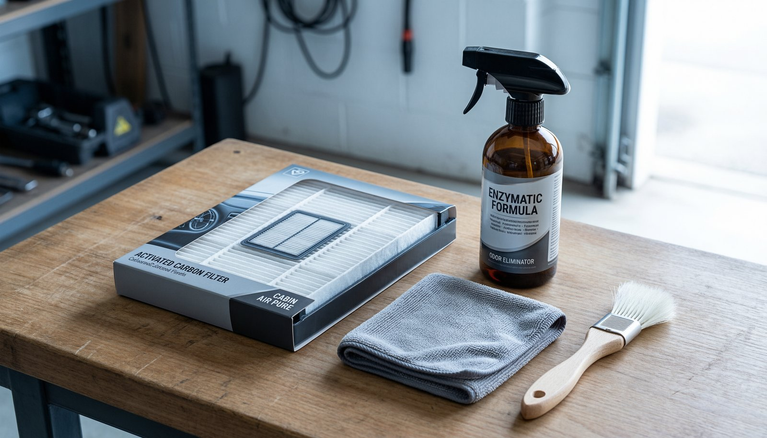
Replacing a loose radiator overflow hose clamp, wiping spilled engine oil off an exhaust heat shield after an oil change, or snapping a fresh cabin air filter into the dashboard slot are simple tasks requiring no major tools.
When to Call a Professional Mechanic
Whenever a fix requires lifting the car safely to change major rotating components or handling high-pressure pressurized systems, hand the keys to an independent repair facility or dealership. Replacing a seized front brake caliper requires opening the hydraulic lines and bleeding air bubbles to ensure stopping safety.
A slipping serpentine belt often points to a failed internal bearing inside the water pump, alternator, or A/C compressor, which demands specialized torque wrenches and belt tensioning tools.
When to Consider Replacing the Vehicle
A burning rubber smell rarely condemns a modern car by itself, but it can serve as the final straw on an older vehicle showing multiple major mechanical failures. If the smell stems from an engine that’s severely leaking oil from every major gasket seal, burning transmission fluid internally, and suffering from a failing main wiring harness, repair bills can swiftly eclipse the street value of the vehicle.
If the cost of repairing deep mechanical oil leaks, worn-out clutches, and failed engine accessories approaches half of the car’s private resale worth, selling or trading the vehicle avoids throwing fresh money into an aging asset. Routine belt replacements or stuck brake repairs, however, remain cost-effective investments that keep a dependable car on the road for thousands of additional miles.
How to Prevent Burnt Odors from Returning
Keeping your vehicle free from scorched chemical smells comes down to simple visual hygiene under the hood and monitoring how your mechanical controls feel.
- Clean your engine bay after adding fluids: Whenever you top off your motor oil, transmission fluid, or power steering reservoir, always use a clean plastic funnel. If a single tablespoon of engine oil spills onto the side of the engine casing, wipe it dry immediately with a clean shop rag rather than leaving it to burn off during your next commute.
- Wash your undercarriage each spring: Road grime, engine oil film, and kicked-up debris accumulate along exhaust shields and around rotating brake assemblies. Using a high-pressure undercarriage spray at a car wash washes away road trash, loose plastic bags, and road salt before they corrode brake caliper slide pins or cook against hot catalytic converters.
- Listen closely to cold starts: A drive belt rarely snaps or burns without warning. Squealing, chirping, or flapping noises that appear for thirty seconds when you first start the car on cold mornings indicate that a belt is slipping or stretching out of alignment. Addressing a noisy belt early prevents it from seizing up and burning while you’re traveling on the highway.
- Release the parking brake fully every time: Make it a physical habit to verify that your emergency brake handle or dashboard switch drops all the way down into its disengaged position before shifting out of park. Even a single click of tension keeps the rear brake pads scraping against the drums or discs, generating burnt rubber fumes within a mile of travel.
- Avoid resting your foot on the pedals: In manual vehicles, never rest your left shoe on the clutch pedal while cruising, and never balance the car on an uphill slope using clutch friction. In automatic vehicles, avoid driving with your left foot hovering over the brake pedal, which inadvertently drags the pads and overheats the friction linings.
The National Highway Traffic Safety Administration maintains public recall databases where owners can verify if their specific vehicle make and model has known open safety recalls regarding defective wiring harnesses, fuel vapor lines, or engine oil leaks. Checking your vehicle identification number on official regulatory websites ensures that manufacturer-recognized fire hazards or defective electrical components are repaired by factory dealerships without unexpected expenses.
Frequently Asked Questions
Can a flat tire cause a burning rubber smell?
Yes, driving on a flat or underinflated tire causes severe internal friction within the rubber sidewalls. The wheel rim pinches the collapsed rubber against the rough pavement, generating intense heat that chars the tire casing within several hundred yards. Pull over safely to check tire pressures if the odor arrives with steering pull.
Why do I smell burning rubber after using my car heater?
The heater pulls air past your engine bay and the electric blower motor resistor pack beneath the dashboard. If the blower motor bearings are seizing or the resistor overheats due to a clogged air filter, you’ll smell hot plastic and scorched rubber through the dashboard vents whenever the fan runs.
How long does it take for a plastic bag to burn off an exhaust pipe?
A grocery bag usually takes several days or up to two weeks of normal driving to burn away completely. The plastic melts deep into the porous, hot steel, slowly smoldering whenever the exhaust warms up. You can accelerate this by waiting until the pipe is cold and scraping off the crust.
Will a slipping alternator belt damage my car battery?
Yes, a slipping belt can’t spin the alternator pulley fast enough to produce adequate charging voltage. The heavy friction scorches the belt rubber while starving your 12-volt battery of electrical power. This condition triggers the red dashboard battery light and quickly drains your battery until the vehicle stalls out completely.
Can severe engine oil leaks cause an under-hood fire?
Yes, engine oil dripping onto extremely hot surfaces can potentially ignite if it reaches exhaust manifolds or catalytic converters running at extreme operating temperatures. While modern engine heat shields reduce this danger, persistent oil leaks that smoke or smell like burning rubber should be inspected promptly to eliminate fire risks.
Does a bad wheel bearing smell like burnt rubber?
No, a failing wheel bearing typically produces a grinding, humming, or roaring metal noise that changes pitch as you steer around corners. While an extremely neglected bearing can generate friction heat, it usually smells like hot, burnt axle grease rather than the sharp, acrid odor of scorched tire rubber.
Take a few minutes today to check your drive belts and look over your wheels after your next trip. Addressing a small oil weep or freeing a sticking brake now keeps your cabin air clean and prevents unexpected breakdowns on the road ahead.