
A ruptured exhaust component, a failing catalytic converter, or a boiling 12-volt battery are the primary reasons a car smells like propane during regular driving. Rotten fuel mixtures, overheated sulfur deposits, and leaking heating cores produce identical chemical fumes. If this harsh vapor fills your cabin while stopped at red lights, turn off your climate system, roll down the windows, and park away from enclosed spaces immediately.
Most Common Reasons for a Propane Odor
Cars run on gasoline, diesel, or high-voltage electric packs, none of which contain actual bottled gas. Below are the six most frequent vehicle faults that trigger this sharp odor, ranked from the most common failure down to the rarest.
- Damaged catalytic converter: When the precious metals inside the exhaust canister degrade or plug up with carbon, unburned engine fuel gathers along the ceramic honeycomb. The exhaust heat cooks these trapped chemical sulfates into sulfur gas, pushing raw fumes out through the tailpipe or upward into your air intake. You’ll need an exhaust shop to test flow pressure or weld in a fresh converter unit.
- Overcharging 12-volt car battery: A failing alternator voltage regulator can force continuous high current into your standard lead-acid battery, boiling the internal acid solution. The battery case vents hydrogen and sulfuric acid vapor under the hood, which smells just like propane and can make your eyes water. Disconnect the terminals carefully once everything cools down and check your charging system.
- Failing fuel pressure regulator: When this small valve sticks shut, the fuel pump delivers too much raw gasoline straight to your combustion chambers. The engine burns rich, dumping heavy soot and unspent fuel straight into the hot exhaust manifold where it creates pungent sulfur vapor. A technician must hook up a direct fuel pressure gauge to confirm the valve is sticking.
- Engine coolant leaking into the heater core: Engine antifreeze has a sweet profile, but when stale coolant seeps through pinholes in the passenger-cabin heater core and lands on hot ductwork, it takes on an acrid, chemical stench. If your floorboards feel damp or your windshield fogs up with oily film when you turn on the defroster, you have a breached cooling system.
- Ruptured exhaust pipe or manifold gasket: If the steel pipe before your catalytic converter cracks, exhaust fumes bypass the filtration screens entirely. Raw engine exhaust escapes under the floorboards and drifts right into the passenger compartment through floor grommets or the fresh-air cowl. A quick physical inspection on a lift will show black soot traces around the cracked joint.
- Leaking vapor canister purge valve: Your evaporative emissions control system captures fuel tank vapors in a charcoal box and feeds them back into the engine. When the purge solenoid sticks open, concentrated fuel vapors flood the intake manifold continuously, generating rich exhaust fumes that enter your vehicle cabin during idle.
| Symptom You Notice | Most Likely Cause | What You Should Do |
|---|---|---|
| Heavy gas smell while idling; car runs sluggishly | Clogged catalytic converter | Have an exhaust mechanic measure backpressure before driving long distances. |
| Sharp rotten-egg stench; hot plastic smell under hood | Overcharging lead-acid battery | Turn off high-draw accessories, inspect the battery case for bulging, and test alternator output. |
| Strong chemical odor with wet passenger carpet | Leaking heater core | Check coolant reservoir level, switch off cabin heat, and inspect cabin carpets for moisture. |
| Odor worsens during acceleration; loud engine tick | Cracked exhaust manifold | Inspect engine bay for dark carbon powder traces; get cracked steel or broken studs replaced. |
| Odor accompanied by black tailpipe smoke | Stuck fuel pressure regulator | Avoid heavy driving to protect engine cylinders; replace the faulty fuel pressure regulator valve. |
| Odor present right after filling the gas tank | Stuck evaporative purge valve | Inspect fuel cap seal; scan computer memory for evaporative emission fault codes. |
Best Natural Car Odor Eliminators: Tested 6 Items That Kill Car Odors for Pennies
What Other Chemical Smells Inside a Car Mean
Your nose often picks up strange odors before any warning light flickers on your dash cluster. While a sulfur or gas leak smell is common, automotive fluids and overheating components give off several distinct chemical scents that point directly to specific failed parts.
Sweet, Syrupy Odor
When you notice a sugary, pancake-syrup smell while driving, you’re smelling ethylene glycol from engine coolant. This odor almost always tracks back to a punctured radiator, split rubber hose, or failing water pump seal. If the smell stays inside the cabin, the heater core behind your dashboard is likely leaking fluid into the air distribution box.
Acetone or Polish Remover
A sharp, sweet, chemical scent that mirrors salon products usually points to a vaporized solvent or air-conditioning issue. Your climate control system may be leaking halogenated refrigerant gas or stale condensation has reacted with bacterial buildup on evaporator fins. High-performance brake fluid leaking onto hot calipers can also mimic this synthetic, biting smell.
Sharp, Burnt Pungency
Acrid, choking fumes that sting your throat usually mean electrical insulation or plastic connectors are burning against hot metal. Loose wiring harnesses can drape across exhaust shields, melting protective plastic loom tubing within seconds. Alternator bearings that freeze up will also scorch their drive belts, releasing thick, gray smoke.
Charred, Heavy Friction Smell
A heavy, industrial smell resembling burned tires happens whenever rubber compounds contact spinning metal or scorching exhaust pipes.
Tip: If an unfamiliar odor suddenly fills your car while driving, turn off the air recirculation button immediately to draw in outside air while you look for a safe place to pull over.
What Checks Can You Safely Do Yourself?
You don’t need a mechanics license to perform basic, visual safety checks around your vehicle.
| SAFE VISUAL INSPECTION FLOW |
|
v
[ Engine Off & Metal Cool to the Touch ]
|
v v
[ Under-Hood Checks ] [ Cabin & Body Checks ]
- Battery case shape – Passenger footwell carpet
- Battery post crust – Climate air intake cowl
- Coolant jug level – Tailpipe soot deposits
- Valve cover oil wetness – Gas cap rubber gasket|v[ Found any wet spots or bulging? ]/ (Yes) (No)v vSchedule professional Scan for stored OBD-IIsystem repair computer trouble codes
Inspect the Battery Casing
Pop your hood after the car has sat turned off for at least an hour. Locate your 12-volt battery and look closely at the rectangular plastic casing. If the sides look swollen, bowed outward, or show wet acid weeping around the seams, the battery is overheating and venting sulfuric acid gas.
Check Fluid Levels in Clear Reservoirs
Look through the translucent sides of your engine coolant tank and brake fluid reservoir without loosening any caps. Low coolant leaves hot pockets inside the engine block that overheat the remaining fluid, creating acrid vapor.
Inspect the Passenger Footwell for Moisture
Slide your hand across the carpet and foam underlay beneath the passenger side of your dashboard. A leaking heater core will saturate the carpet padding long before coolant pools on top of the floor mats.
Scan Under-Hood Hoses and Belts
Look over the rubber drive belts at the front or side of the engine using a bright flashlight. Check for frayed cords, cracked rubber grooves, or glossy, glazed surfaces that show the belt has been slipping against seized pulleys. Trace the thick rubber radiator hoses from the engine block to the radiator frame.
Check Tailpipe Deposits and Fuel Cap
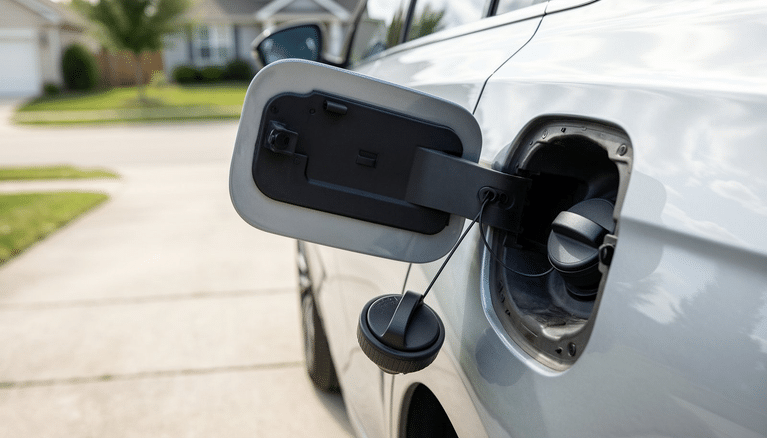
Walk to the back of the car and inspect the inner rim of the exhaust tailpipe. Next, open your fuel filler door, unscrew the gas cap, and inspect the circular rubber gasket.
Is It Safe to Drive When Your Car Smells Like Gas?
No, you should never continue driving normally when raw gas, sulfur, or heavy chemical odors enter your vehicle interior. Propane-like smells mean that either explosive hydrogen fuel gas is venting under the hood, or high concentrations of carbon monoxide are bypassing your exhaust filters and entering your passenger space.
Park the vehicle outside on a concrete driveway or gravel pad rather than inside an enclosed residential garage.
Fix It Yourself vs Call a Professional vs Replace
Deciding whether to handle a repair in your driveway or hand the keys to an automotive repair shop comes down to safety limits, proper tools, and the age of your vehicle.
| REPAIR DECISION PATHWAY |
|
[ What is causing the odor? ]
|
v v v
[ Battery or Cap ] [ Exhaust / Cat ] [ Heater Core ]
v v v
DIY Repair Shop Service Weigh Vehicle Age
(Swap parts) (Welding/Lifts) (High labor costs)
Simple Driveway Fixes
Replacing a swollen 12-volt battery, snapping on a new fuel filler cap, or swapping an accessible EVAP purge valve are tasks most car owners can complete safely. A replacement battery requires only an open-end wrench to remove the negative terminal first, then the positive terminal, followed by the base hold-down bracket.
Professional Shop Repairs
Exhaust welding, catalytic converter replacement, fuel rail diagnosis, and alternator regulator troubleshooting belong strictly in a licensed professional repair shop. Catalytic converters run at temperatures above 1,000 degrees Fahrenheit, and exhaust pipe bolts routinely rust solid, requiring hydraulic lifts, induction heaters, and welding torches to remove safely.
When to Consider Replacing the Vehicle
If your vehicle has accumulated high mileage, carries extensive body rust, and suffers from both a clogged catalytic converter and a ruptured heater core simultaneously, the professional labor costs can quickly exceed the resale value of the car.
How Can You Prevent Exhaust and Battery Odors?
Catching small mechanical issues early stops sulfur and chemical odors from ever reaching your car interior.
- Change engine oil on schedule: Dirty, broken-down oil slips past piston rings and burns in the combustion chambers, coating your catalytic converter with thick phosphorus and zinc ash that causes early converter failure.
- Fix engine misfires right away: When a spark plug or ignition coil fails, the engine light flashes. Raw fuel pumps straight into the exhaust system, melting the internal converter honeycomb in less than twenty miles of driving.
- Clean battery terminals regularly: Spray corroded battery terminals with baking soda dissolved in warm water, scrub the posts with an old toothbrush, and coat the clean metal with a thin smear of petroleum jelly to block acid creep.
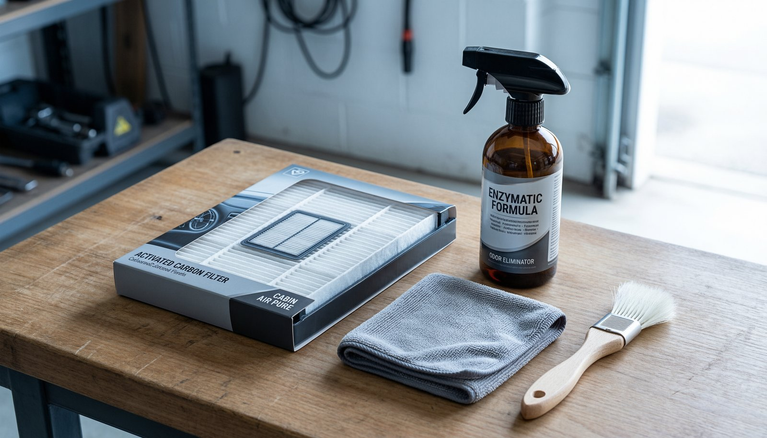
- Replace cabin air filters annually: Your passenger cabin air filter sits behind the glove box, trapping road debris, sulfur soot, and pollen before it enters the vents. A clean filter keeps air moving freely and blocks outside smells.
- Avoid running on an empty fuel tank: Driving with your fuel gauge resting on empty pulls sediment from the bottom of the fuel tank into the fuel pump filters, starving the engine of fuel pressure and causing rich-lean fuel mixture errors.
Tip: Keep a small notebook in your glove compartment to log the date and odometer reading whenever you replace filters, fluid caps, or the 12-volt battery.
Frequently Asked Questions
Can an exhaust leak smell like propane gas?
Yes, an exhaust leak upstream of the catalytic converter releases raw combustion gases that carry sulfur compounds. When these gases escape from cracked manifolds or blown gaskets under your vehicle floor, they seep into the passenger cabin through air vents and smell remarkably like commercial bottled propane fuel.
Will a bad car battery trigger a check engine light?
No, a failing or overcharged 12-volt battery usually won’t illuminate your check engine light directly. It typically trips the dashboard battery icon or charging system warning symbol instead. However, erratic voltage spikes from a faulty alternator can eventually cause other engine sensors to log false trouble codes.
Why does the smell get worse when I turn on the heat?
Your climate control fan draws fresh air directly through plastic cowl grilles located right below the front windshield glass. If your car battery is boiling acid or a heater core is leaking chemical coolant behind the dashboard, the blower motor pushes those concentrated fumes straight into your face.
Can bad gasoline cause a rotten egg or propane smell?
Yes, cheap or contaminated fuel with high sulfur content produces noticeable rotten-egg odors during combustion. If an oil refinery fails to strip sulfur properly, your catalytic converter converts that extra sulfur into hydrogen sulfide gas. The odor typically disappears once you burn through that tank and refill elsewhere.
How long does a catalytic converter usually work before failing?
A factory catalytic converter is built to last the lifetime of the vehicle, routinely performing without trouble as it ages or well past 100,000 miles. They only fail early when unburned engine fuel, leaking head gasket coolant, or burned motor oil enters the exhaust and contaminates the precious catalyst metals.
Is sulfur smell from a car dangerous to inhale?
Yes, inhaling sulfur fumes, hydrogen sulfide, and raw exhaust gases inside an enclosed car cabin irritates your respiratory system and causes nausea, dizziness, and headaches. Over prolonged periods, exhaust leaks carry dangerous levels of odorless carbon monoxide, which reduces oxygen flow in your bloodstream and impairs driving ability.
Schedule a professional diagnostic scan with an independent repair facility to pull any pending emissions trouble codes and verify your alternator charging voltage. Addressing a faint sulfur odor today protects your exhaust converters from permanent heat damage and keeps your cabin air clean and safe to breathe.