A loose gas cap, an unburnt fuel charge during cold starts, or a leaking fuel line usually explains why a car smells like gas. While a faint whiff right after cranking an older engine in cold weather can clear up in under two minutes, any raw fuel smell that lingers inside the passenger cabin points to an active vapor or liquid leak that needs prompt inspection before you drive any further.
Top reasons your car smells like gas
Fuel vapors are light, highly pungent, and easily pulled through the fresh-air intake of your vehicle’s heating and air conditioning system. When you notice raw fumes, one of the following issues is almost always responsible.
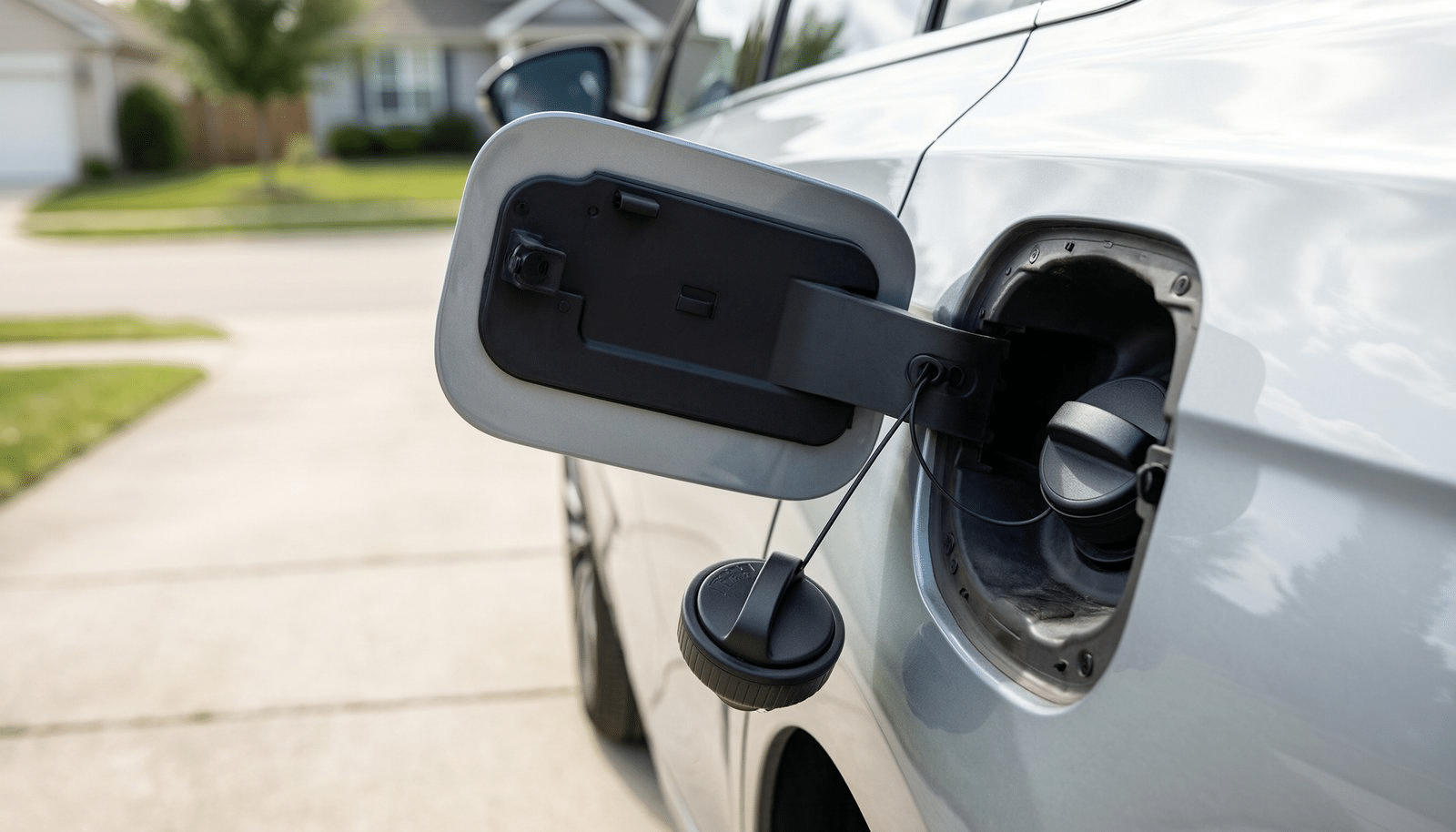
- Loose, missing, or worn gas cap: An untightened filler cap allows pressurized fuel tank vapors to escape directly into the air around the rear quarter panel and wheel well. Tighten the cap until it firmly clicks, or inspect the small rubber O-ring along its inner lip for cracks that prevent a complete seal.
- Cold engine startup rich mixture: When an engine first turns over, the computer pumps extra gasoline into the cylinders to keep the cold block idling smoothly. A slight exhaust smell near the tailpipe is normal during the first minute, but it should disappear completely once the engine warms up.
- Leaking fuel line or quick-connect fitting: Plastic and metal supply lines run underneath the floorboards, carrying pressurized gasoline directly to the engine bay. If road debris chips a line or a quick-connect joint dry-rots, liquid fuel drips onto the undercarriage, which quickly sends raw fumes straight into the car cabin.
- Cracked charcoal canister or purge valve fault: Modern cars capture fuel tank vapors inside an evaporative emissions canister packed with activated carbon. If the plastic housing cracks from gravel impacts, or if the purge valve under the hood sticks open, concentrated fuel vapor escapes into the engine compartment.
- Sticking or weeping fuel injector: Injectors sit right on top of the intake manifold, sealed by small rubber rings called O-rings that dry out over years of engine heat. A leaking upper O-ring pools raw gasoline on top of the warm engine valley, which creates an immediate, sharp fuel smell through the dashboard vents.
- Saturated cabin air filter: If you stepped in spilled gasoline at a service station or drove past a fuel spill, the paper pleats of your cabin air filter can absorb the vapors. The HVAC blower fan then continually pushes that trapped smell across the interior every time you switch on the fan.
- Punctured fuel tank: Road hazards can puncture modern plastic tanks, while road salt frequently rusts older stamped-steel tanks along their top seams. Liquid fuel pooling beneath the rear seats or under the trunk floor generates an overpowering vapor cloud that never dissipates on its own.
| Symptom Pattern | Most Likely Cause | What to Do About It |
|---|---|---|
| Strong gas smell right after refilling the tank | Loose filler cap or damaged neck seal | Re-tighten until it clicks, check rubber seal, or inspect under the rear bumper for drips |
| Sharp vapor odor coming through the A/C vents | Leaking injector O-ring or under-hood line | Park immediately, turn off the engine, and inspect the top of the motor for wet spots |
| Faint exhaust-fuel smell only during cold mornings | Normal rich cold-start fuel map | Wait two minutes; if the odor clears as the temperature gauge rises, no action is needed |
| Lingering gas smell inside cabin with no damp spots | Saturated cabin filter or tracked-in fuel | Sniff floor mats, check shoe soles, and replace the cabin air filter behind the glovebox |
| Pungent vapor smell around the rear wheels | Leaking fuel pump sender seal or cracked tank | Look under the rear axle for dampness; don’t drive if you see active wet patches |
| Odor paired with a hissing sound near the engine | Stuck-open evaporative purge valve | Scan computer for emissions codes; replace the faulty electronic valve assembly |
Safe Checks You Can Perform Yourself
You don’t need mechanical credentials to check for the external causes of fuel odor. By systematically inspecting external surfaces and common contact points, you can quickly separate a minor vapor leak from a hazardous liquid spill without taking anything apart.
Check the Fuel Filler Cap and Neck
Begin at the gas cap door. Open the fuel door and check whether the cap was left hanging by its tether or cross-threaded during your last visit to the pump. Unscrew the cap completely and run your fingertip along the circular black rubber gasket on the underside. If the rubber feels hard, brittle, or split, vapor can seep out under tank pressure and drift along the side of the car body.
Wipe any built-up grit off the metal filler neck rim with a dry paper towel, reinstall the cap, and turn it clockwise until it ratchets firmly.
Inspect the Driveway and Underside for Puddles
Park the vehicle on dry, level pavement, switch off the ignition, and walk around the perimeter. Look underneath the middle and rear sections of the vehicle using a flashlight. Gasoline evaporates quickly.
Tip: Place a clean sheet of plain white cardboard beneath the engine bay and fuel tank overnight to catch faint, fast-drying drips that leave an amber tint.
If you spot liquid actively dripping onto the pavement at a rate of more than two drops per minute, step away from the car.
Search the Interior and Mats for Footwear Contamination
Before assuming your fuel delivery hardware has failed, check the carpets. It takes only a few drops of raw fuel on the bottom of a shoe sole to fill an enclosed passenger cabin with overpowering fumes for several days.
Lean down and sniff the driver’s side footwell, the pedals, and the bottom of the shoes you wore during your last fuel fill-up.
Sniff the Dashboard Air Vents
Start the car in a well-ventilated outdoor driveway, let it idle, and switch the climate control fan to low with the air conditioning off and fresh-air mode selected. If the smell rushes out of the dashboard registers immediately, the vapor source sits inside the engine compartment where the HVAC intake cowl draws air from the base of the windshield.
Inspect the Engine Bay for Surface Dampness
Pop the hood latch, prop the hood open safely, and look over the top of the motor with the engine turned off. Follow the fuel rail—the metal pipe assembly that feeds gasoline directly into the top of the engine block. Inspect the base of each individual fuel injector where it enters the manifold.
The injector bases should appear completely dry and dusty. If any injector looks wet, dark, or unusually clean compared to the dusty parts around it, fuel is weeping past an external rubber seal.
Is It Safe to Drive with a Gas Smell?
Driving a car that smells strongly of raw gas is never safe if the odor persists past initial startup. Liquid fuel leaks can ignite on contact with hot exhaust headers or catalytic converters, while heavy interior vapors cause headache, dizziness, and dulled driving reflexes in under fifteen minutes of exposure.
- Roll down all four windows halfway to clear fumes from the passenger compartment.
- Turn off the climate control system entirely to prevent the blower fan from drawing under-hood air into the dashboard vents.
- Signal, pull smoothly off the roadway onto a wide shoulder, and switch off the engine immediately.
- Exit the car and move well away from the road shoulder while waiting for assistance.
If you discover a visible leak underneath the vehicle or if raw vapors cause physical burning in your eyes or throat, don’t drive the car to a repair shop. The safe decision is to leave the engine off and call a flatbed tow truck.
How Weather and Seasons Change How Fuel Smells
Fuel odor behaves differently depending on ambient temperatures and seasonal gasoline blends. Many drivers notice faint petroleum smells exclusively during the first hard freeze of autumn or during scorching midsummer heat waves.
Cold Weather Fuel Enrichment
During freezing weather, gasoline doesn’t vaporize as easily inside cold metal cylinders. To ensure the engine starts reliably, the engine control module commands the fuel injectors to spray extra fuel into the incoming air stream—a process traditionally called running “rich.”
Because the catalytic converter needs to reach roughly 800 degrees Fahrenheit before it can begin burning off excess hydrocarbons, unburnt fuel passes straight out of the exhaust pipe during the first two minutes of idling.
Refineries change fuel composition between seasons. Winter-blend gasoline contains lighter hydrocarbons with a higher Reid Vapor Pressure (RVP), meaning it evaporates at lower temperatures to help cold-weather combustion. This higher volatility makes minor vapor leaks smell significantly stronger on chilly mornings than they do in mild spring weather.
Summer Heat and Evaporative Tank Pressure
On hot summer afternoons, the temperature of the asphalt beneath your car can easily exceed 130 degrees Fahrenheit. That radiant heat warms the fuel tank from below, causing the gasoline inside to expand and boil off into vapor rapidly.
Under normal conditions, the vehicle’s evaporative emission control system routes these expanding vapors through a vent tube directly into the charcoal canister.
Fixing It Yourself vs Calling a Professional
You can safely handle dry external parts and basic cleaning, but hire a professional technician when liquid fuel lines, high-pressure fittings, or sealed fuel tanks are involved.
What You Can Handle at Home
There are several straightforward issues you can resolve in your driveway with basic supplies:
- Replacing a damaged gas cap: You can buy a factory-original replacement cap at an auto parts counter and twist it on by hand.
- Cleaning contaminated cabin surfaces: Scrubbing floor mats with warm soapy water removes tracked-in pump fuel without risk.
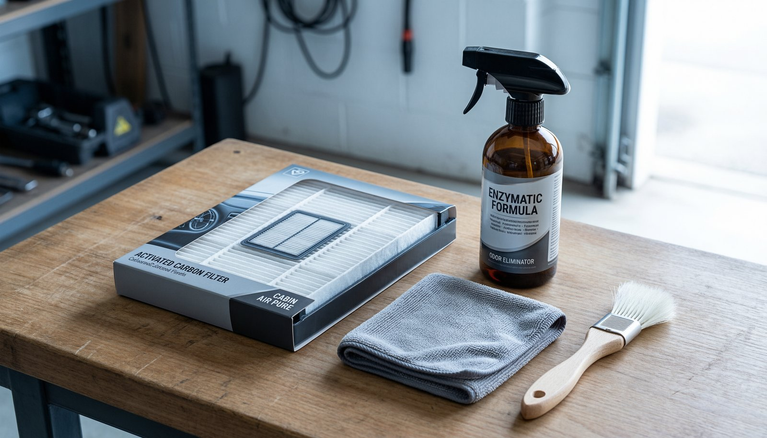
- Replacing the cabin air filter: Located behind the glovebox in most vehicles, this slide-out paper element requires no tools and clears odors trapped in the HVAC ducting.
- Resetting capless fuel necks: Using the factory funnel tool to clear grit from the internal flap is completely safe and requires no mechanical disassembly.
Professional-Only Repairs
Gasoline carries serious fire, health, and environmental hazards. You should always hand the car over to an experienced mechanic if your checks point to any of the following failures:
- Dropping the fuel tank: Tanks are bulky, heavy, and held by rusted underbody straps; dropping them safely requires a vehicle lift, transmission jack, and specialized fuel-draining equipment.
- Replacing fuel injector seals: Working on the fuel rail requires relieving high fuel line pressure safely without spraying fuel across hot engine components.
- Bending or splicing hard fuel lines: Damaged metal fuel lines require specific flare fittings and high-pressure hose ratings that standard utility clamps can’t safely match.
- Opening internal emissions hardware: Servicing vapor recovery modules located above rear subframes requires diagnostic scan tools to run automated system leak checks.
The EPA emissions standards strictly govern the evaporative systems that trap fuel vapors, ensuring modern cars keep volatile organic compounds out of the atmosphere.
Frequently Asked Questions
Can I spray cleaner on the engine to remove a gas smell?
No, you should never spray cleaners on a warm engine. Solvents can ignite on hot exhaust manifolds, and water can push spilled fuel into deep wiring pockets. Let the engine cool completely and wipe surfaces with dry, lint-free shop rags instead.
Why does my car smell like gas only after I fill up?
A smell that appears only after refueling usually points to an overfilled tank, an unlatched gas cap, or a rusted fuel filler neck. Avoid clicking the pump handle multiple times after it shuts off, as excess fuel floods the vapor recovery canister.
Will a gas smell make my Check Engine light turn on?
Yes, vapor leaks regularly trigger the Check Engine light by causing evaporative emissions codes like P0440, P0442, or P0455. The vehicle computer constantly runs pressure tests on the fuel system and flags any unexpected drop in tank pressure as an emissions fault.
How long does it take for a spilled gas smell to go away?
Spilled gasoline usually evaporates completely within twenty-four hours in dry, ventilated air. However, if liquid soaked into interior carpets or trunk mats, the heavy petroleum residue can linger for several weeks unless washed out with soap and water.
Can an exhaust leak smell like raw gasoline?
Yes, a cracked exhaust manifold or leaking catalytic converter gasket lets raw exhaust fumes escape right under the engine hood. If the engine is running rich, those unburnt exhaust gases smell identical to raw gasoline before passing through the tailpipe.
Is smelling gas inside the car bad for your health?
Yes, breathing concentrated gasoline vapors can cause headaches, dizziness, and nausea in under fifteen minutes. Fuel fumes contain benzene and other volatile compounds that irritate the lungs and impair your driving concentration, making prompt inspection essential.
Roll your windows down and park your vehicle outside away from open flames while you trace the source of the fumes. If tightening your gas cap and cleaning your floor mats doesn’t eliminate the odor, schedule an appointment with a certified mechanic to inspect your fuel lines before driving again.