Most leather seat odors fade when you remove the source, clean gently, dry fully, and improve airflow.
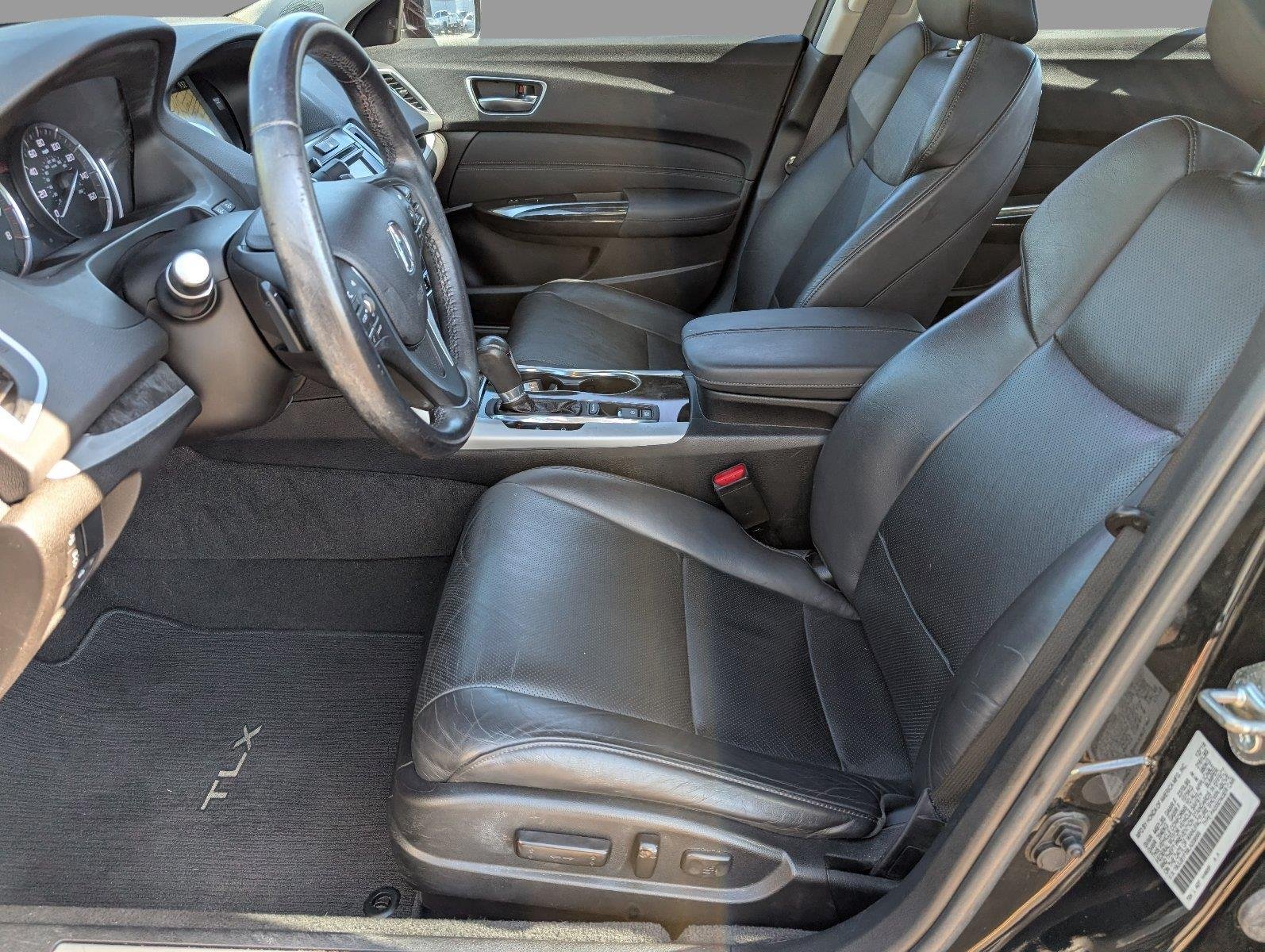
Leather car seats can hold odors from spilled drinks, food, sweat, smoke, pets, mildew, and damp floor mats. The smell may seem trapped in the leather, but it often comes from seams, foam, carpets, or the cabin air filter. That is why learning how to remove odor from leather car seats starts with finding the source, not simply covering it with air freshener.
This guide explains safe cleaning methods for finished leather, helpful home remedies, products to avoid, and signs that you need professional detailing. The steps are based on common automotive leather-care practices and the way odor moves through a vehicle’s interior.
Best Car Odor Eliminator Spray: Tested 7 Sprays Neutralize Odors at the Molecule Level
Find the Source of the Odor First
Before cleaning the seats, inspect the whole cabin. Leather is often blamed because it is easy to see, but many smells begin underneath or beside the seats.
Check these areas:
• Seat seams and stitching, where crumbs and liquid can collect
• The gap between the seat and center console
• Seat rails and floor carpeting
• Floor mats, especially rubber mats that trap water
• Door pockets, cup holders, and storage bins
• The trunk or cargo area
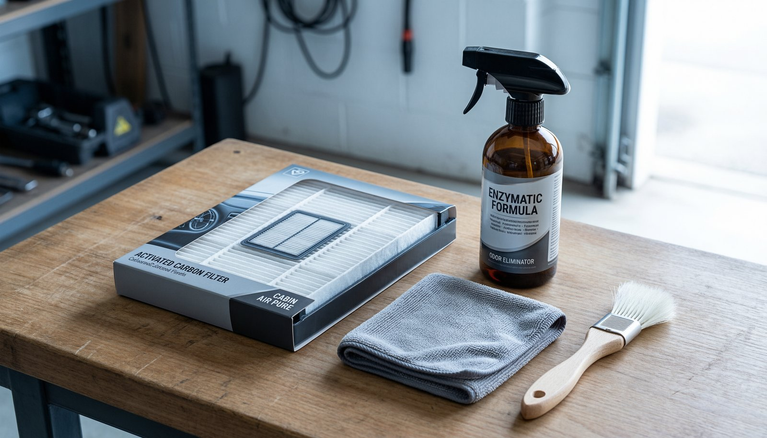
• The cabin air filter and air vents
• Child safety seats, pet blankets, and seat covers
A sour smell often points to moisture or spilled drinks. Smoke odor can affect the headliner, carpet, and ventilation system. A musty odor may signal damp carpet or mildew.
Remove all personal items from the vehicle. Open the doors and let the cabin air out before you clean. This makes it easier to tell whether the smell is coming from the leather or another surface.
Why Leather Car Seats Develop Odors
Leather is not a solid plastic sheet. Automotive leather has a protective finish, tiny surface texture, seams, and areas where odor can collect. Some seats also contain perforations that allow liquid to reach the foam below.
Common causes include:
Food and drink spills
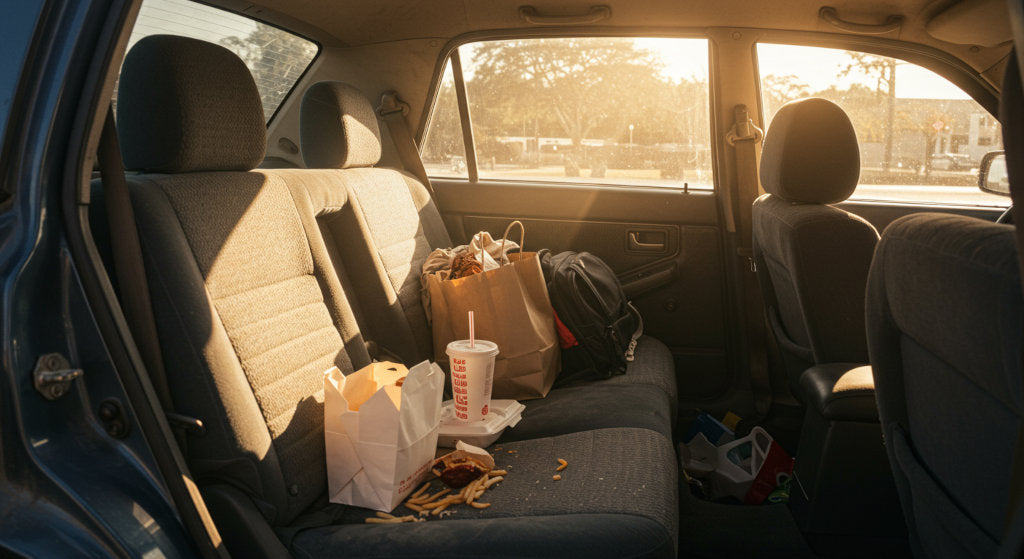
Milk, coffee, soda, juice, and sauces can leave sugars, oils, and proteins behind. Even a small spill can smell stronger after the vehicle warms in the sun.
Sweat and body oils
Daily use transfers skin oils and sweat to the seat surface. Over time, this residue can create a stale or sour smell, especially in hot weather.
Cigarette and cigar smoke
Smoke particles settle into leather, carpet, plastic, and fabric. Cleaning the seats alone may not remove the full odor because the headliner and air system can also hold smoke residue.
Pets
Pet hair, dander, saliva, and accidents can create strong odors. A pet carrier or blanket may also spread the smell back into a clean car.
Water and mildew
Wet clothing, snow, rain, leaks, and damp mats can increase moisture inside the cabin. If the foam or carpet stays wet, mildew may develop.
Aging materials
Some older vehicles develop odors from foam, adhesives, vinyl trim, or deteriorating insulation. In that case, cleaning the leather may reduce the smell but will not fully solve it.
How to Remove Odor From Leather Car Seats Safely
Start with the mildest method. Strong chemicals can damage the finish, remove color, or leave the leather dry and cracked.
Step 1: Vacuum the seats
Use a vacuum with a soft brush attachment. Clean the seat surface, seams, creases, perforations, and the space under the seats.
Do not press a hard plastic nozzle into the leather. It can scratch the finish. Move slowly so you lift grit instead of rubbing it deeper into the grain.
Step 2: Test the cleaner
Choose a cleaner made for finished automotive leather. Apply a small amount to a hidden area, such as the lower rear edge of the seat.
Wait until the test spot dries. Stop if you notice color transfer, dullness, stickiness, swelling, or a change in texture.
Step 3: Clean with a damp microfiber cloth
Mix a small amount of mild leather cleaner with water if the product label allows it. Spray the cleaner onto a microfiber cloth, not directly onto the seat.
Wipe one small section at a time. Use gentle pressure around seams and perforations. Avoid soaking the seat, because excess liquid can move into the foam.
Step 4: Remove cleaner residue
Use a second microfiber cloth that is barely damp with clean water. Wipe away leftover cleaner. Residue can attract dirt and create a new smell.
Step 5: Dry the seats fully
Leave the doors or windows open in a safe, dry place. Use a fan if needed. Avoid high heat from a hair dryer, heat gun, or strong heater, since heat can dry or distort leather.
Step 6: Apply a compatible conditioner
Once the seats are completely dry, use a conditioner designed for automotive finished leather. Apply a thin layer and buff away excess product.
Conditioner helps maintain flexibility, but it is not an odor remover. Applying too much can make seats greasy and attract more dirt.
This process is the core of how to remove odor from leather car seats without harming the protective finish. Slow, light cleaning is safer than aggressive scrubbing.
Home Remedies That May Help
Some home methods can help with mild odors, but they must be used carefully. Natural does not always mean safe for leather.
Baking soda
Place an open bowl or breathable pouch of baking soda inside the vehicle overnight. Keep the powder off the leather surface and away from seat controls.
Baking soda can help absorb some airborne odors. It will not remove a deep spill inside the foam, and loose powder may enter perforations.
Activated charcoal
Activated charcoal bags can absorb odors inside a closed cabin. They are useful for smoke, food, and general stale smells.
Use charcoal as a supporting step after cleaning. It cannot replace source removal or treatment of damp materials.
Diluted white vinegar
Vinegar is sometimes suggested for odor control, but direct use on leather is risky. Its acidity may affect the finish, dye, or surface coating.
If you use vinegar at all, keep it for washable carpets or plastic surfaces after checking the manufacturer’s guidance. Do not saturate leather seats with vinegar.
Enzyme cleaners
An enzyme cleaner may help with organic odors, such as pet urine or food residue. Choose one labeled safe for automotive leather, and always test it first.
Many enzyme products are designed for fabric and carpet, not leather. Never assume a carpet formula is safe for a leather seat.
What Not to Use on Leather Seats
The wrong product can remove odor while causing permanent cosmetic damage. Avoid these common mistakes:
• Bleach, ammonia, and strong disinfectants
• Undiluted vinegar or rubbing alcohol
• Hydrogen peroxide without manufacturer approval
• Household degreasers
• Glass cleaner
• Abrasive sponges and stiff brushes
• Excessive water or steam
• Perfume sprays and heavy air fresheners
• Furniture polish or products containing silicone
• Essential oils applied directly to leather
Do not scrub a stain until the surface becomes hot or shiny. That can wear through the protective coating. If the smell comes from a deep spill, repeated surface cleaning may do more harm than good.
Always check the vehicle owner’s manual. Some vehicles use coated leather, semi-aniline leather, synthetic leather, or vinyl. These materials do not respond in exactly the same way,
How to Remove Smoke Odor From Leather Car Seats
Smoke odor requires a whole-cabin approach. Wiping the seats alone usually gives only temporary results.
Follow these steps:
- Remove ash, cigarette packs, and other odor sources.
- Vacuum the seats, carpet, trunk, and headliner with care.
- Clean the leather using a compatible automotive leather cleaner.
- Wipe hard plastic and vinyl surfaces with an interior-safe cleaner.
- Clean the windows, because smoke film often collects on glass.
- Replace the cabin air filter if it smells smoky.
- Ventilate the vehicle for several hours or days when weather permits.
- Use activated charcoal to reduce remaining airborne odor.
Be gentle with the headliner. It can loosen or sag if it becomes wet. For heavy smoke contamination, professional interior cleaning may be more effective than repeated home treatment.
Ozone generators are sometimes used by professionals, but they require caution. Ozone can irritate the lungs and may damage rubber, plastics, dyes, and other materials when misused. Never sit inside a vehicle during ozone treatment, and follow professional safety instructions.
How to Remove Pet and Mildew Odors
Pet odors often return because the source is hidden in carpet, seat foam, or padding. Look for stains under mats and around seat mounting points.
Use a leather-safe cleaner on the seat. For carpet and fabric, use an appropriate enzyme cleaner after testing for colorfastness. Remove washable blankets and carriers from the vehicle and clean them separately.
Mildew requires extra care. Find and repair the water source before cleaning. Possible causes include:
• Door seal leaks
• Sunroof drain problems
• Windshield or rear-window leaks
• Wet floor mats
• Air-conditioning condensation
• Spilled liquids under the carpet
Dry the affected area completely. If carpet padding or seat foam remains damp, the odor will likely return. Heavy mildew, visible mold, or repeated water damage should be handled by a qualified detailer or mold-remediation professional.

When Odor Comes From Inside the Seat
A surface cleaner cannot reach every odor source. Liquid may travel through stitching or perforations and settle in the foam beneath the leather.
Signs of a deeper problem include:
• The odor becomes stronger when the seat gets warm
• The smell returns within a day or two of cleaning
• A specific section smells worse when pressed
• Liquid previously soaked into the seat
• The seat feels damp or unusually soft
Avoid flooding the seat to “flush out” the smell. That can spread the contamination and damage electrical parts, heating elements, or airbag components.
A professional detailer may use controlled extraction, specialized leather products, odor-neutralizing treatments, or partial seat disassembly. Ask what method will be used and whether it is safe for your seat type.
A Simple Maintenance Plan
Regular care makes how to remove odor from leather car seats much easier. Small cleanups prevent residue from becoming a deep odor.
Use this routine:
• Vacuum the seats and gaps every two to four weeks.
• Wipe spills as soon as possible.
• Keep wet towels, gym clothes, and pet bedding out of the car.
• Clean floor mats during rainy or snowy seasons.
• Avoid eating messy food in the vehicle when possible.
• Leave windows slightly open only when the car is parked in a safe, dry place.
• Replace the cabin air filter according to the vehicle manual.
• Condition the leather only when it looks dry, not after every wash.
Do not use a strong fragrance to hide a bad smell. A clean cabin should smell neutral. Fragrance mixed with smoke, mildew, or spoiled food often creates an even less pleasant result.
Common Mistakes and Practical Lessons
One of the most common mistakes is using too much product. A wet cloth is usually enough for routine cleaning. A dripping cloth can push moisture into seams and foam.
Another mistake is cleaning only the visible seat. If a drink soaked into the carpet or a pet accident reached the padding, the seat may not be the true source.
It is also easy to confuse leather cleaner with leather conditioner. Cleaner removes residue. Conditioner supports the feel of the material. Neither product can repair damaged leather or remove every deep odor.
A practical lesson from professional detailing is to work in small sections and let each area dry before judging the result. Warm air can make an odor seem stronger for a short time, so wait several hours before deciding whether the treatment worked.
Frequently Asked Questions
How do you remove a bad smell from leather car seats?
Vacuum the seats, clean them with a leather-safe product, remove residue with a damp microfiber cloth, and dry them fully. Also inspect the carpet, seat foam, floor mats, and cabin air filter for the real odor source.
Can I use baking soda directly on leather car seats?
It is better to place baking soda in a bowl or breathable pouch rather than spread it on leather. Loose powder can enter perforations and may leave residue that is difficult to remove.
Will vinegar remove odor from leather car seats?
Vinegar may help on some hard or washable surfaces, but it can affect leather finishes and dyes. Avoid applying undiluted vinegar to leather, and use a product approved for automotive leather instead.
How do I remove cigarette smoke from leather seats?
Clean the leather, carpet, plastic, windows, and other interior surfaces. Replace a smoky cabin air filter and ventilate the car, because smoke particles can remain in the headliner and air system.
Why does the odor come back after cleaning?
The source may be inside the seat foam, carpet padding, or ventilation system. Moisture can also cause the smell to return, so find leaks and dry the cabin completely.
Is steam cleaning safe for leather car seats?
Steam can damage some leather finishes, adhesives, dyes, and electronic seat parts. Only use it when the vehicle or leather-care manufacturer approves the method and the operator understands automotive interiors.
When should I hire a professional detailer?
Hire a professional when the smell comes from deep foam, mildew, heavy smoke, sewage, or a large liquid spill. Professional help is also wise when cleaning has not improved the odor after one or two careful attempts.
Conclusion
The best way to remove odor from leather car seats is to remove the source, vacuum carefully, use a leather-safe cleaner, avoid excess moisture, and dry the interior completely. Baking soda and activated charcoal may support the process, but they cannot replace proper cleaning when odor has reached carpet or foam.
Start with a small hidden test area, work slowly, and avoid harsh household chemicals. If the smell returns, inspect beneath the seats and consider professional detailing. Put these steps into practice today, and share your results or explore more vehicle-care guides for a fresher, cleaner cabin.