You can get rid of the smell by breaking down the uric acid crystals with an enzyme cleaner, which removes human urine odor from a couch without harsh chemicals by using that biological method instead of bleach or ammonia. It takes about 15 minutes of work and up to 24 hours to dry.
The exact time depends on your fabric type, how deep the liquid went, and whether you’re treating a fresh spot or an old stain. Those three things change every step below.
Who needs to remove human urine smell
Someone dealing with a fresh accident on a removable cushion cover needs a quick wash routine, not a deep treatment. They already have access to a machine and just need the right temperature.
A person facing a dried stain that soaked into the foam underneath needs enzymes and patience. The liquid is past the fabric now, so surface wiping won’t reach it.
Then there’s the owner of a leather or suede sofa. This page isn’t for them. Enzyme cleaners and moisture can ruin animal hides, so they should contact a professional upholstery restorer instead.
This guide serves people with standard fabric couches—cotton, polyester, or blends—where the liquid has reached the padding. It assumes you don’t have a commercial extraction machine at home.
9 Best Human Urine Odor Remover That Actually Work (Tested & Ranked)
What changes the result
Uric acid causes the lingering odor because it forms crystals that water alone can’t dissolve. Only enzymes break those crystals down into soluble compounds that can be removed or further digested. If you skip the enzyme step, the smell returns when humidity rises.
Fabric thickness decides how much liquid you’ll need. A thin polyester blend might need 2 cups of solution; a thick cotton weave could absorb 4 cups before reaching the foam. Check your tag—if it says “W,” water-based cleaners are safe.
Fresh spills take less effort than old ones. A spot treated within an hour might need one application. A stain left for weeks usually requires two or three rounds, spaced 24 hours apart.
Room airflow controls drying speed. A fan running nearby cuts drying time roughly in half compared to still air. Without airflow, moisture sits in the foam and breeds mildew, trading a urine smell for a musty one.
People most often guess wrong about how deep the liquid went. You can’t see it once it passes the fabric. Press a dry paper towel firmly against the cushion; if it comes back damp after you’ve cleaned the surface, the padding is still wet.
Steps to clean urine from a couch
Follow these steps in order. Skipping ahead leaves the source untouched.
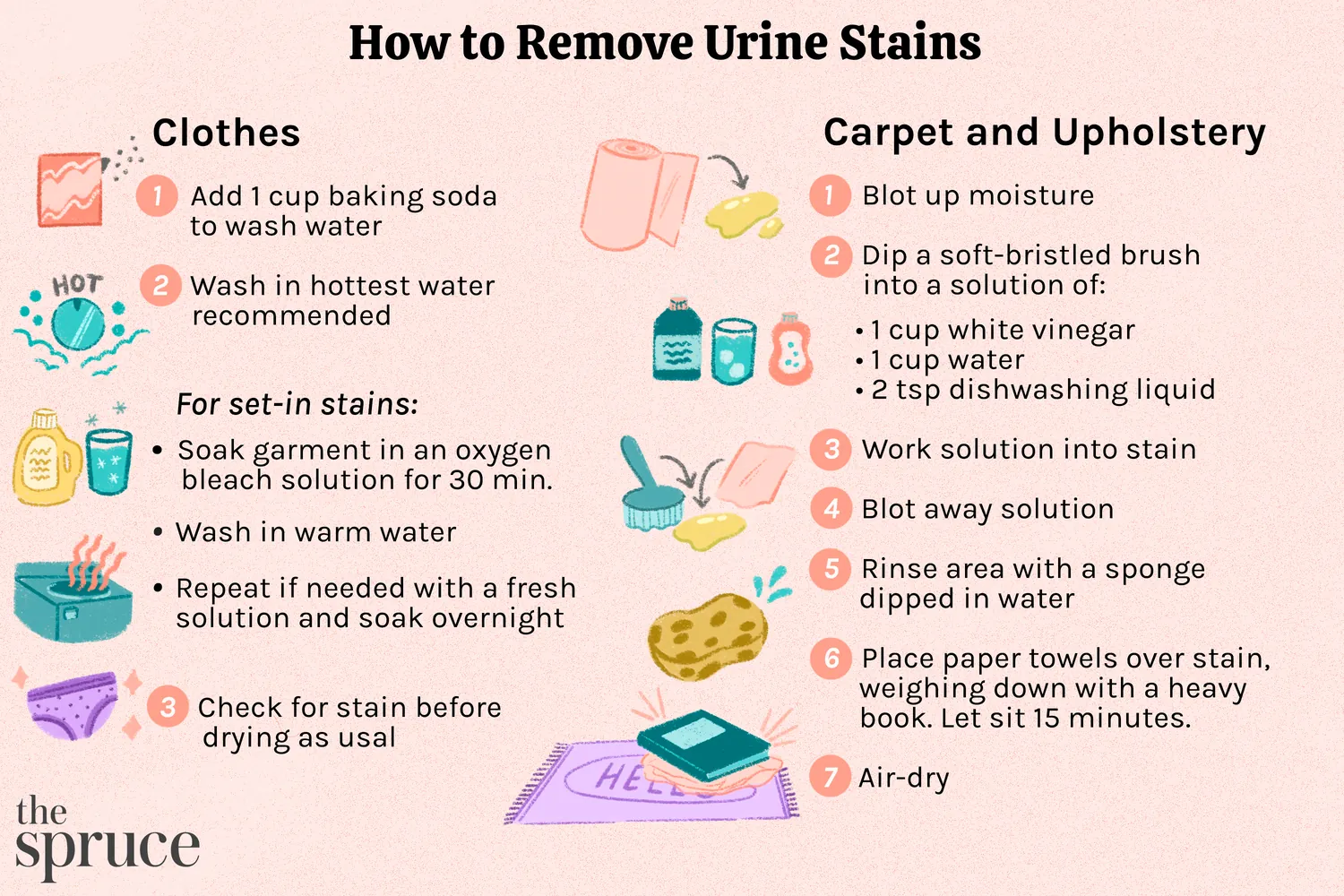
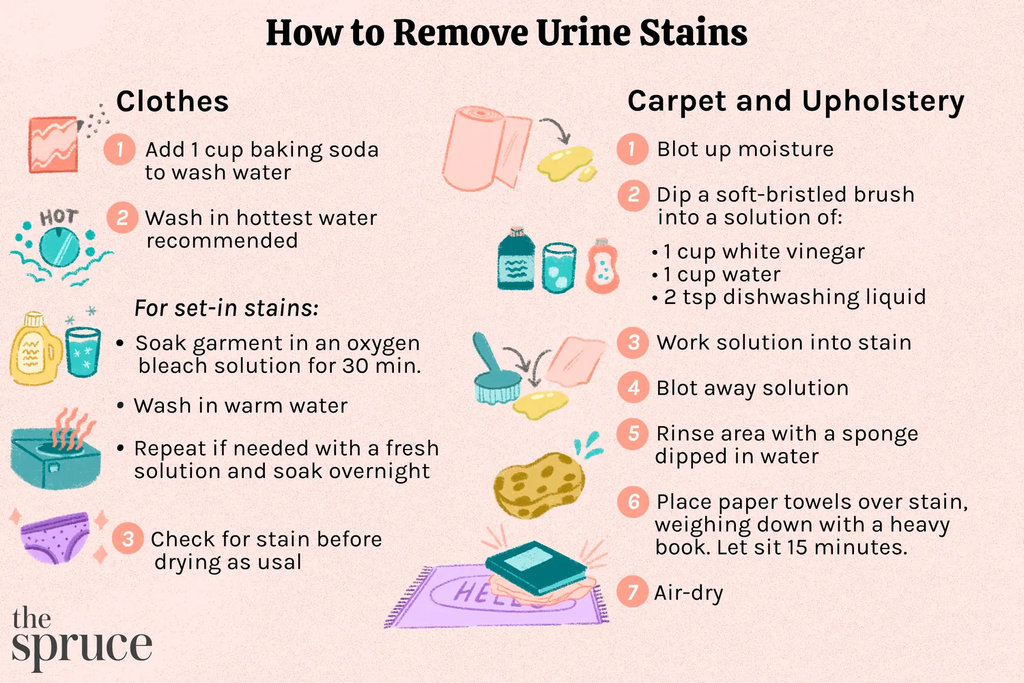
- Blot the wet area with dry paper towels, pressing straight down until no more moisture transfers. Don’t rub—it pushes liquid deeper.
- Mix cool water and white vinegar in equal parts, about 1 cup each for a standard spill. Pour it slowly over the stained area to saturate the fabric.
- Let the vinegar mixture sit for 10 minutes. You’ll notice the sharp ammonia scent fading slightly as the acid neutralizes alkaline salts.
- Blot again with fresh dry towels until the fabric feels only damp, not wet.
- Apply an enzyme-based pet urine remover—these work on human urine too—following the bottle’s dosage. For a 6-inch spot, that’s usually 3 to 4 ounces. Saturate past the visible edge by 2 inches.
- Cover the treated area loosely with plastic wrap to slow evaporation. Enzymes need moisture to keep working. Leave it covered for 8 to 12 hours.
- Remove the plastic and let the cushion air-dry completely. Point a fan at it. Drying takes 12 to 24 hours depending on room humidity.
- Once bone-dry, vacuum the area to lift any stiffened fibers or leftover residue.
The single judgment call happens at step five. If the smell persists after one full cycle, the liquid reached the inner foam core. At that point, removing the cushion cover to treat the bare foam directly is the next move. If your cushion doesn’t unzip, or the frame itself absorbed the liquid, stop here. A professional upholstery cleaner has the extraction tools needed to pull moisture from fixed frames safely.
Situations and what they require
Different conditions demand different responses. Match your situation to the row below before buying supplies.
| Your situation | What to do | Time needed | Watch out for |
|---|---|---|---|
| Fresh spill, under 1 hour | Blot, apply vinegar, then enzymes | 12-24 hours total | Rubbing the fabric |
| Dried stain, days old | Rehydrate with water first, then enzymes | 24-48 hours total | Using hot water |
| Soaked through to foam | Remove cover, treat foam directly | 48 hours minimum | Mold growth inside |
| Polyester or microfiber | Use less liquid, blot faster | 8-12 hours total | Water rings forming |
| Thick cotton or linen | Saturate deeply, extend enzyme time | 24-36 hours total | Shrinkage from heat |
| Smell returns when humid | Repeat enzyme treatment once | 24 hours again | Skipping plastic wrap |
Details that separate good results
Getting the liquid amount right
Pouring too little enzyme cleaner is the main reason odors return. The solution must reach exactly where the urine went, which is always deeper than the visible stain. Measure your spot’s diameter and add 2 inches all around—that’s your target zone.
If you use 2 ounces on a spot that absorbed 6 ounces of urine, the enzymes run out of fuel before finishing the job. Read the bottle’s coverage rate. Most brands list square footage per ounce on the back label.
Reading the fabric care tag
The manufacturer’s tag tells you what the fibers can handle. A “W” means water-based solutions like vinegar and enzymes are fine. An “S” means solvent-only, so water will leave permanent rings.
Don’t guess if the tag is missing. Test your vinegar mix on a hidden corner, like the lower back panel. Wait 30 minutes. If the color stays true and the texture doesn’t pucker, proceed. If it changes, stop and hire a professional who handles solvent-safe cleaning.
Couch odor problems and fixes
Things go wrong when steps are rushed or mixed up. Match the symptom to the fix below.
| What you notice | What it usually means | What to do first | How to stop it happening again |
|---|---|---|---|
| Smell returns after drying | Enzymes didn’t reach deep enough | Reapply cleaner, cover longer | Saturate past the stain edge |
| Fabric feels stiff or crunchy | Vinegar or soap residue remains | Mist with plain water, blot dry | Rinse with water after cleaning |
| Dark ring around the spot | Moisture wicked outward while drying | Clean the whole cushion section | Dry quickly with a fan |
| Musty sour smell develops | Foam stayed wet too long | Remove cover, dry foam separately | Never skip the fan step |
| Color faded in one patch | Bleach or hydrogen peroxide was used | Stop using oxidizers immediately | Stick to enzymes and vinegar |
| Nothing changed after treatment | Urine hit the wooden frame beneath | Call an upholstery professional | Catch accidents before they soak |
Safety rules for cleaning fabrics
Mixing chemicals creates hazards. Never combine vinegar with bleach—the reaction produces chlorine gas, which the CDC warns causes severe respiratory damage. Pick one path: acid-based (vinegar) or enzyme-based. Don’t layer them simultaneously.
Ventilation matters when working indoors. Open a window or run an exhaust fan while applying any liquid cleaner. Breathing concentrated vinegar fumes in a closed room irritates the throat and lungs.
Check your local waste guidelines if you’re disposing of heavily soiled materials. Some municipalities classify chemically treated rags differently than regular trash. Your city’s sanitation department website lists what goes in which bin.
If the couch belongs to a rental property, review your lease before applying liquids. Some agreements require professional cleaning for biohazards, and doing it yourself might void your deposit protection.
What this actually costs
Enzyme cleaners are inexpensive relative to professional-grade jugs for home furniture. A standard bottle at most grocery stores handles two or three standard cushion spots.
White vinegar is inexpensive relative to commercial alternatives. You’ll use maybe a cup per incident, making it nearly free per cleanup. Paper towels and plastic wrap add minimal cost.
Time is the real expense. The active work takes 15 minutes, but you lose use of that seat for a full day while it dries. If you rush the drying phase and trap moisture, you’ll pay for a professional extraction service later.
Prices shift by region and store. Check your local hardware shop’s shelf tags rather than relying on online averages, since shipping heavy liquids inflates web prices significantly.
Keeping the couch fresh after
Once the enzymes finish their work, the odor won’t come back unless new moisture reactivates surviving crystals. Keep the room’s relative humidity below 60 percent. A cheap hygrometer from a hardware store tells you exactly where your room stands.
Don’t spray perfumed fabric refreshers over the area. Fragrances mask smells temporarily but don’t break down proteins. When the perfume fades, you’ll wonder if the urine smell returned or if it never left.
Vacuum the cushions weekly to prevent dust from settling into the slightly raised fibers left behind by wet cleaning. If you notice stiffness returning after a few months, lightly mist the spot with plain water and blot it dry to relax the threads.
Store any leftover enzyme cleaner in a cool, dark cabinet. Heat degrades the bacteria inside the bottle, turning a living cleaner into dead liquid. Check the expiration date printed on the bottom before saving it for next time.
When to skip DIY couch cleaning
Leather, faux leather, and suede react badly to water and enzymes. Liquid causes permanent staining and cracking on these surfaces. Take those pieces to a specialist who uses solvent-based conditioners instead.
If the urine soaked through a non-removable cushion into the wooden frame underneath, surface treatments won’t reach it. The wood absorbs the liquid and holds the smell indefinitely. Professional restorers disassemble the frame to treat the wood directly.
Repeated accidents in the same spot eventually overwhelm the foam’s structure. If you’ve treated the same area three times and the foam feels permanently damp or spongy, the padding is ruined. Replace the cushion insert entirely rather than pouring more liquid into degraded material.
Biohazard situations involving illness require different handling. If the urine contains blood or comes from someone with an infectious condition, wear gloves and follow your local health department’s disposal guidance rather than standard cleaning steps.
Frequently asked questions
Can I use baking soda instead of enzymes?
No, baking soda absorbs moisture but doesn’t destroy uric acid crystals. It helps dry a spot faster after enzyme treatment, but used alone, the smell returns once humidity rises. Sprinkle it only after the liquid steps are done.
Why does the smell come back when it rains?
High humidity allows uric acid crystals to absorb moisture, enabling residual bacteria to release odor molecules again. The crystals release odor molecules again when wet. Running a dehumidifier during damp weather prevents this reactivation cycle.
How long does enzyme cleaner need to sit?
Most brands require 8 to 12 hours of damp contact time to digest proteins fully. Check your specific bottle’s label, as concentration varies. Covering the spot with plastic wrap keeps it moist long enough.
Is it safe to use vinegar on colored fabric?
Diluted white vinegar is generally safe for colorfast fabrics, but test a hidden corner first. Wait 30 minutes to check for fading or texture changes. Never use apple cider or red wine vinegar, which contain dyes.
What happens if I use hot water on urine?
Hot water cooks the proteins in urine, bonding them permanently to the fabric fibers. Always use cool or lukewarm water for both the initial rinse and the enzyme application. Heat sets stains instantly.
Does hydrogen peroxide work better than vinegar?
Peroxide bleaches fabrics and can weaken fibers, though it kills bacteria well. Vinegar neutralizes ammonia safely without altering colors. Stick to vinegar for the prep step unless you’re treating white, bleach-safe material.
How many times should I repeat the process?
One full cycle works for fresh spills. Older or deeper stains might need two applications spaced 24 hours apart. If the third attempt fails, the liquid has likely reached the frame, requiring professional equipment.
Will a steam cleaner remove the odor?
Steam applies extreme heat, which permanently binds urine proteins to fabric. Never use a steam cleaner on biological stains. Extraction machines that use cold water and suction are safe, but steam models aren’t.
Start treating your couch today
Grab paper towels and blot the spot immediately, even if it’s already dry—re-wetting it with vinegar is your first real move. You’ll know it worked when the cushion dries completely and smells like nothing at all, not perfume or sourness. If the foam stays wet past 48 hours despite a fan, stop and call a professional upholstery cleaner.