
A sharp, chemical odor in a passenger cabin resembling nail polish remover typically points to a solvent spill or an escaping synthetic fluid. When investigating this nail polish remover scent, the primary culprits are a leaking heater core misting fluid into the cabin vents, an overcharged electrical system venting battery gases, or a hidden cosmetic spill on the upholstery.
Likely Causes Ranked by Likelihood and Severity
Chemical scents inside a vehicle happen because volatile liquids evaporate and blow through the climate vents directly into your face.
- Heater core coolant leak: A dripping or weeping heater core lets hot antifreeze seep into the air passages behind your dashboard. This produces a sweet, syrup-like vapor whenever the fan pushes air through the vents.
- Air conditioning refrigerant leak:
- Boiling or overcharging 12-volt battery:
- Spilled cleaning or grooming products: A forgotten bottle of cosmetics, hand sanitizer, or adhesive cleaner tucked inside a storage pocket or under a floor mat will vent strong chemical fumes under the heat of parked sunlight.
- Catalytic converter exhaust failure: Unburned fuel compounds breaking down abnormally inside a failing exhaust unit produce acidic, chemical fumes that drift into the cabin through trunk vents or aged weatherstripping.
| Symptom | Most Likely Cause | What to Do About It |
|---|---|---|
| Sweet chemical scent through vents, greasy film inside windshield | Heater core coolant leak | Check radiator overflow reservoir; inspect front passenger floor carpet for damp spots |
| Sharp chemical odor only while the A/C runs; warm vent air | Refrigerant and oil leak | Turn off the climate control system; inspect rubber A/C hoses for oily dirt build-up |
| Pungent, acidic chemical odor; battery case feels hot or swollen | Overcharging 12-volt battery | Turn off engine immediately; avoid open sparks; inspect battery housing for bulging sides |
| Strong acetone scent concentrated in rear seats or center console | Hidden spill of cosmetics or solvent | Inspect storage bins, seat pockets, and under floor mats for damp fabric or open containers |
| Chemical odor alongside rotten egg scent near rear bumper | Exhaust or catalytic breakdown | Inspect tailpipe clearance; run vehicle only in well-ventilated areas outdoors |
| Burning chemical scent during high-speed highway driving | Serpentine belt slipping on pulley | Check belt tension and look for black rubber dust around engine front pulleys |
How Long Can You Safely Drive with This Chemical Smell?
You shouldn’t drive your vehicle for more than a few miles once this sharp odor appears, because breathing concentrated chemical vapor causes rapid headaches, eye irritation, and dizziness behind the wheel. If the cause is a leaking heater core or escaping refrigerant, operating the vehicle risks sudden engine overheating or compressor destruction that leaves you stranded.
Tip: If a chemical smell appears while you’re driving, switch off the recirculation button immediately, crack two windows to create a cross-breeze, and pull over safely to inspect your vehicle.
Simple and Safe Checks Any Driver Can Perform
You don’t need mechanical tools to track down the source of a solvent odor. A systematic sensory inspection helps you identify the affected area without taking apart panels or risking personal safety.
Check the Passenger Footwell and Floor Mats
Run your bare hand across the carpet underneath the dashboard on the front passenger side. The vehicle heater core sits behind the center console, and when its internal metal tubes crack, fluid collects in the passenger footwell carpet.
Feel for a slick, oily moisture rather than plain rain water.
Inspect the Inside Surface of Your Windshield
Turn on your vehicle defroster for two minutes while looking at the glass directly above the dashboard vents. A failing heater core mists microscopic droplets of hot antifreeze onto the windshield glass.
Observe the Coolant Reservoir Level
Open the hood while the engine is cold to inspect the plastic coolant expansion tank mounted near the fender. The side of this translucent tank features molded plastic lines marking low and full levels.
| ENGINE COOLANT RESERVOIR GUIDE |
| |
| [ MAX / FULL ] <— Level should sit here cold |
| v |
| [ MIN / LOW ] <— Fluid below here indicates leak |
| |
| * Always inspect levels when the vehicle sits cold |
Examine the 12-Volt Battery for Heat and Distortion
Locate your vehicle starting battery under the hood or beneath the trunk floor panel. Without touching metal terminals with jewelry or tools, shine a flashlight along the plastic battery casing.
A battery receiving excessive voltage from an alternator fault will often swell, causing the flat plastic side walls to bulge outward. If the plastic case looks deformed or has bubbling residue around the vent caps, the battery is boiling internally.
Search Storage Pockets for Leaking Bottles
Check every hidden storage compartment before assuming you have a major mechanical fault. Open the glove box, inspect the center console storage bin, and shine a flashlight into the pockets attached to the back of the front seats.
Is It Safe to Inhale Chemical Fumes from Car Vents?
Inhaling chemical fumes from car vents is never safe, because automotive vapors contain toxic solvents that irritate the respiratory tract and impair brain function.
Distinguishing Between Similar Under-Hood Smells
Different automotive fluid leaks produce distinct aromas that can confuse an untrained nose. Knowing the difference between chemical smells and burning fluids helps you communicate the exact issue to a repair technician.
Chemical Acetone versus Propane Scents
An acetone or nail polish remover smell has a sharp, medicinal bite that irritates your nose immediately. It smells bright, sweet, and synthetic, much like industrial paint thinner or strong beauty salon products.
In contrast, an odor resembling cooking gas or propane is heavier and possesses an earthy, rotten undertone.
Antifreeze versus Leaking Air Conditioning Oil
Antifreeze escaping from a heater core has an unmistakably sugary, maple syrup-like fragrance mixed with its chemical undertones. It creates a warm, heavy atmosphere in the cabin that coats the tongue when breathed through the mouth.
Air conditioning refrigerant leaks smell colder, thinner, and more metallic. Because the pressurized gas carries PAG synthetic oil out of the pipe break, it carries a mechanical, dry-cleaning smell rather than a sweet syrup scent.
- Acetone / Polish Remover: Sharp, crisp, chemical bite (Refrigerant or solvent)
- Sweet Maple / Heavy Syrup: Warm, sickeningly sweet, sticky (Engine coolant)
- Rotten Eggs / Heavy Sulfur: Earthy, suffocating, rotten (Battery acid or exhaust)
- Scorched Rubber / Friction: Dark, acrid, stinging smoke (Drive belts or wiring)
Acetone versus Scorched Rubber and Belts
A slipping serpentine belt or overheating wiring harness produces a suffocating, dark stench like burning tires. This smell is harsh and soot-like, catching in your throat and making you cough immediately.
Common Driver Mistakes When Dealing with In-Cabin Odors
Drivers often make predictable errors when odd odors develop inside their car. Avoiding these common mistakes saves money and prevents simple component leaks from escalating into extensive engine damage.
Masking the Smell with Air Fresheners
Hanging cardboard scents or clipping oil diffusers over air vents only covers up warning signs. A masking fragrance prevents you from noticing when an engine coolant leak grows larger or when escaping battery fumes reach dangerous levels.
Pouring Chemical Stop-Leak Into the Radiator
Pouring radiator stop-leak to seal a suspected heater core leak often causes severe mechanical headaches. These liquid sealers contain particulate matter designed to swell inside openings.
While they occasionally slow a pinhole leak, they frequently plug the tiny passages inside the heater core and engine radiator completely. This reduces overall cooling capacity, causing engine overheating that costs far more to repair than fixing the original heater core leak properly.
Running Climate Control on Recirculation Mode
When faced with an offensive chemical smell, many motorists press the interior air recirculation button under the false assumption that it blocks outside fumes. If the leak originates inside your heater core or A/C evaporator box, this setting actually seals you inside a closed loop with the evaporating toxins.
Recirculation traps the chemical vapor inside the cabin, causing the concentration of airborne toxins to spike. Always set the climate control to draw fresh outside air when strange smells appear, or open the side windows entirely.
Best Car Odor Eliminator Spray: Tested 7 Sprays Neutralize Odors at the Molecule Level
What Steps Can You Handle Yourself Versus Calling a Pro?
Every car owner can perform basic detective work, but vehicle repairs require knowing your limits.
Safe Tasks You Can Handle at Home
- Inspecting fluid reservoirs: You can safely monitor the fluid levels in the coolant recovery bottle, windshield washer jug, and brake master cylinder without special tools.
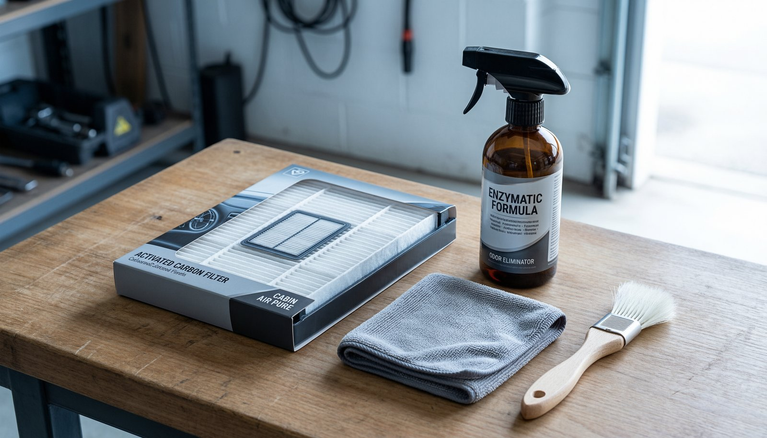
- Cabin air filter replacement: Most modern vehicles feature a slide-out filter element located directly behind the glove box that requires no tools to inspect or replace.
- Interior deep cleaning: Shampooing automotive carpets to remove spilled hand sanitizers, cosmetics, or beverage syrups is completely safe to do in a home driveway.
- Visual battery checks: Looking at the outer battery case and cleaning dry powdery crust from exterior plastic surfaces can be done safely using basic eye protection.
Tasks Requiring an Experienced Professional
- Heater core replacement: Removing a heater core requires dismantling the entire dashboard structure, steering column supports, and passenger airbag assemblies.
- Air conditioning system evacuation: Automotive refrigerant is held under high pressure and requires specialized recovery machines to capture the gas without venting it illegally into the open atmosphere.
- Alternator charging diagnostic: Testing an alternator providing unstable voltage requires dedicated automotive diagnostic meters and testing equipment.
- Exhaust system repairs: Fixing broken catalytic converters or cracked exhaust manifolds requires under-car lifts and heavy metal fabrication tools.
Tip: If replacing the cabin air filter and thoroughly washing the interior floor mats doesn’t eliminate the solvent smell within two days, stop driving the car and schedule a cooling system pressure test.
How to Clean Persistent Chemical Residue from Carpets
If you find that an old bottle of cosmetic remover, nail polish, or craft solvent leaked into your carpet or seat fabric, cleaning the liquid correctly stops continuous vapor release.
Absorb the Excess Liquid Immediately
Press clean white paper towels or an old cotton towel directly over the spill area. Don’t scrub or drag the cloth across the carpet, as this pushes the chemical fluid deeper into the lower foam padding and spreads the stain wider across the floor.
Neutralize the Solvent Smell with Baking Soda
Sprinkle a generous, quarter-inch layer of dry household baking soda directly over the affected carpet patch. Baking soda naturally draws lingering organic compounds and chemical vapors out of textile fibers.
Leave the dry powder undisturbed on the floor overnight. Vacuum up the dry powder the following morning.
Wash with Mild Dish Soap and Water
Mix a tablespoon of plain dishwashing liquid into a bowl of warm water. Dip a soft-bristled brush into the soapy suds and gently scrub the carpet fibers using circular motions.
Blot the wet surface with a clean, dry microfiber cloth to pick up lifted residue. Leave your car doors wide open on a warm, breezy day, or place a household box fan on the floorboard pointing directly at the wet spot for three hours until the floor dries completely.
Why Does My Car Smell Like Propane?
A propane or rotten egg scent entering your vehicle passenger cabin points to unburned sulfur compounds escaping from a failing exhaust catalytic converter, a leaking fuel line, or an overheating lead-acid battery. Degraded catalyst blocks or engine misfires cause the exhaust system to vent intense hydrogen sulfide gas.
Why Is My Car Smelling Like Burning Rubber?
A burning rubber scent while driving is caused by friction heat melting rubber engine drive belts, electrical wire insulation touching hot exhaust manifolds, or stuck brake calipers dragging against spinning metal brake rotors. The most common cause is a loose or misaligned serpentine belt slipping rapidly over an engine pulley that has seized up or stopped spinning freely.
Frequently Asked Questions
Can a dirty cabin air filter cause this chemical smell?
Yes, a clogged cabin air filter can smell like old chemicals if it absorbs road oils, windshield de-icer fluid, or trapped mold. Changing the filter element often resolves faint interior odors, provided the heater core and air conditioning system pipes aren’t leaking fluid behind your dashboard.
How do I confirm my heater core is leaking?
You can confirm a heater core leak by running the defroster with a warm engine while watching the glass. If an oily mist coats the windshield while a sweet chemical smell fills the cabin and your coolant tank level drops, your heater core has an active leak.
Will an acetone smell damage my car interior permanently?
No, the chemical scent won’t permanently damage your car interior if you air it out and remove the source promptly. However, raw liquid acetone spilled onto plastic dashboard trim or painted surfaces will soften, melt, and permanently discolor those plastic pieces within minutes of contact.
Can an overcharged battery cause an explosion?
Yes, a severely overcharged automotive battery generates concentrated hydrogen gas that can ignite from a small spark. If your battery casing appears swollen, hot to the touch, or releases a sharp acidic odor, avoid operating electrical switches nearby and consult a professional technician immediately.
Why does the chemical smell get stronger when I turn on the heat?
The chemical smell intensifies with heat because high engine temperatures force hot antifreeze through your dashboard heater core.
Check your engine coolant reservoir level and examine the front passenger floor carpet for dampness before you drive again. If checking the carpet and clearing out personal items doesn’t pinpoint the odor, have a certified shop pressure-test your cooling system to protect your health and your vehicle engine.