
A skunk-like odor in cars often comes from fuel, sulfur, or skunk spray.
If you’ve ever asked, why does my car smell like skunk, you are not alone. I’ve diagnosed this exact complaint hundreds of times in shops and driveways. From fuel system leaks to a failing catalytic converter to actual skunk spray on the undercarriage, the root cause matters. Stick with me as we break down why does my car smell like skunk, how to pinpoint it fast, and the exact steps to fix it for good.
What That Skunky Smell Really Is
Skunk odor comes from sulfur-based compounds called thiols, also known as mercaptans. These same types of compounds show up in fuel, gear oil, and some exhaust byproducts. That is why a skunk-like smell often points to fuel, exhaust, or lubricant issues.
Exhaust that smells like rotten eggs or sharp sulfur can mean unburned fuel is hitting the catalytic converter. This can create hydrogen sulfide, which is very pungent. Some fluids like gear oil are also formulated with sulfur additives that smell strong, even when not burnt.
Road spray or a real skunk can also tag your undercarriage. When that dries on a hot exhaust or muffler, it can re-odor every time the metal heats up. Skunk scent bonds to oils, so it lingers.

Why does my car smell like skunk? Main causes
If you are wondering, why does my car smell like skunk, start with the usual suspects. Below are the common sources and the signs to watch.
A failing catalytic converter or rich fuel mix
A bad converter, misfire, or rich mixture can make hydrogen sulfide. That smells like rotten eggs or skunk. Look for a check-engine light and codes like P0420 or misfire codes.
Fuel system leaks or EVAP problems
Leaking injectors, cracked fuel lines, a loose gas cap, or a bad charcoal canister can vent raw fuel vapors. Raw fuel can carry a sulfur edge that smells skunky. You may notice the smell near the rear of the car or after refueling.
Gear oil or differential leak
Gear oil contains sulfur-based additives. A small leak on the axle, differential, or manual trans can smell like skunk. Drips on hot exhaust parts will make the smell much worse.
HVAC system growth or dead critters
Mildew in the A/C evaporator or a dead mouse in the blower housing can smell awful and sharp. This is common if the smell is strongest with the A/C on. A dirty cabin air filter can trap and spread that odor.
Actual skunk spray or road tar on the exhaust
One quick splash of skunk spray, tar, or oily road gunk on your muffler can turn the whole car into a stink bomb. Heat reactivates the smell. It may come and go with longer drives.
Electrical short or overheated component
Burning insulation or electronics can smell fishy or acrid, sometimes “skunky.” If you also see smoke or a hot plastic odor, stop and get help. Electrical smells often show up after an accessory or wiring change.
Engine oil leaking onto hot parts
Burnt oil has a bitter, acrid odor. If the oil has sulfur-rich additives, you might read it as skunky, especially from the cabin at idle. Look for blue smoke or oil spots on the driveway.
Quick Diagnostic Checklist
Use this simple plan to zero in fast on why does my car smell like skunk.
- Note when the smell happens. Idle, A/C on, after refueling, or after a long drive.
- Check outside first. Walk around the car. Sniff near each wheel, the rear, and near the hood in fresh air.
- Look for leaks. Use a flashlight to scan for wet spots on lines, the differential, and around the exhaust.
- Check the gas cap. Make sure it clicks tight. Replace worn caps.
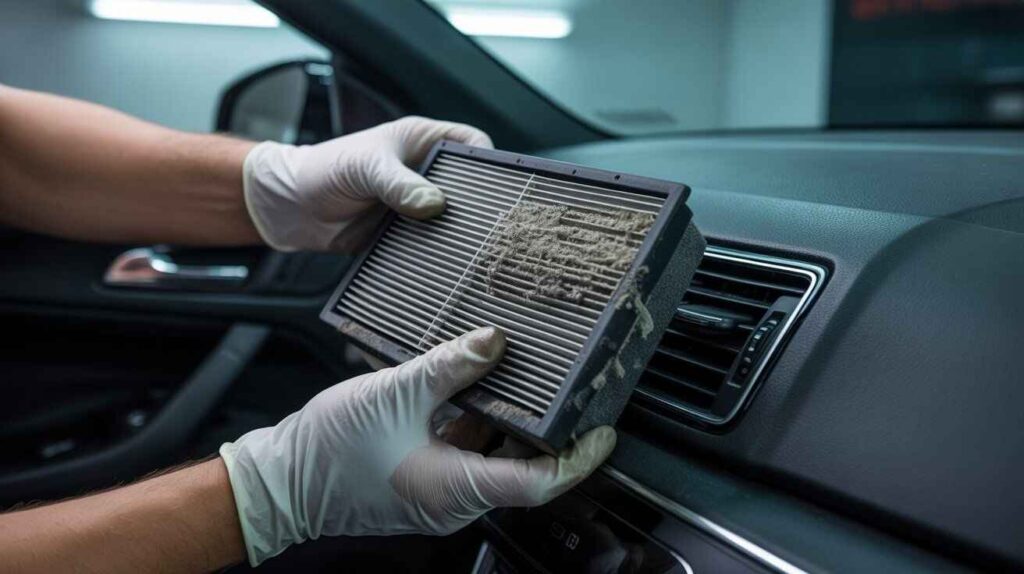
- Inspect the cabin air filter. If it is dirty, wet, or smelly, replace it.
- Toggle A/C modes. Switch between fresh air and recirculate. If smell changes, think HVAC or outside source.
- Scan for codes. A cheap OBD-II scanner can reveal misfires, O2 sensor issues, or catalyst efficiency problems.
- Listen and feel. Rough idle or low power pairs with exhaust or fuel issues.
- If you suspect a skunk hit, check the undercarriage and muffler for sticky spots.
How to Get Rid of the Skunk-Like Smell
Once you have a likely cause, use the right fix. These steps can end the odor and answer why does my car smell like skunk for good.
- Catalytic converter or rich mix
- Fix misfires first. Replace bad coils, plugs, or injectors.
- Address O2 sensor or MAF issues that cause rich fuel.
- Replace the catalytic converter only after upstream problems are fixed.
- Fuel and EVAP issues
- Replace a loose or cracked gas cap.
- Have a smoke test done to find EVAP leaks.
- Repair leaking fuel lines, injectors, or the charcoal canister.
- HVAC odors
- Replace the cabin air filter. Use activated carbon if possible.
- Clean the evaporator with an A/C foam cleaner through the drain or intake.
- Use an enzyme-based odor remover for organic growth. Ozone treatments work but use them with care and only on an empty car.
- Skunk spray or tar on the exhaust
- Let the exhaust cool. Then degrease. Use a mix of 3% hydrogen peroxide, baking soda, and a few drops of dish soap on metal parts only. Rinse well.
- Commercial skunk odor removers also work on paint and metal. Avoid bleach and never mix cleaners.
- Pressure wash the undercarriage if possible.
- Interior fabrics
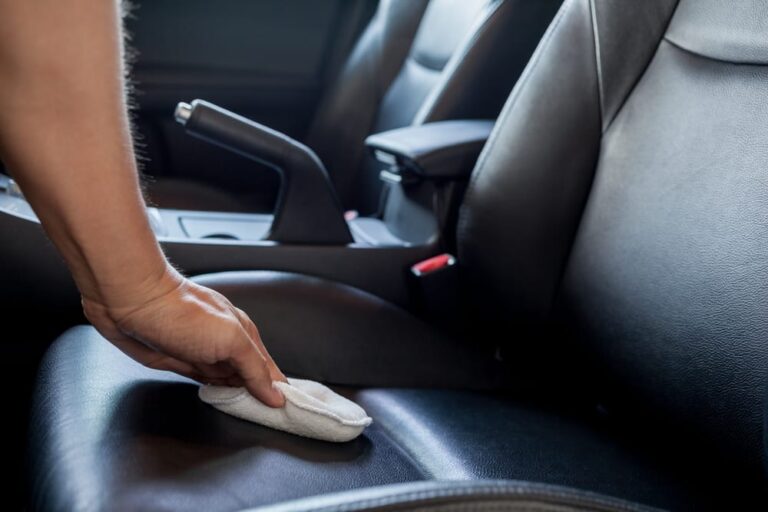
- Blot, then clean with enzyme cleaner or steam. Do not oversaturate foam seats.
- Air out the car with windows open on a warm, dry day. Add bowls of baking soda or charcoal overnight.
- Gear oil leaks
- Replace axle seals or differential cover gaskets.
- Refill with the correct fluid and check the vent.
- Electrical smells
- Do not drive if you smell burning plastic. Tow the car. Have wiring inspected.
Prevention and Maintenance Tips
Keep stink out with simple habits.
- Replace the cabin air filter every 12 months or 12,000–15,000 miles.
- Run the A/C on fresh air for a few minutes before parking to dry the evaporator.
- Fix check-engine lights fast. Do not drive long with misfires or rich codes.
- Wash the undercarriage after winter or a skunk encounter.
- Park away from brush where skunks and rodents hide.
- Seal entry points for rodents. Use rodent-safe repellents.
- Use top-tier fuel and keep up with oil changes.
If you follow these steps, you will ask why does my car smell like skunk far less often.
When to See a Mechanic and Safety Flags
Some smells mean stop now.
- Strong raw fuel smell inside or outside that does not fade.
- Headache, dizziness, or nausea while driving. Get fresh air now. Suspect exhaust leaks.
- Smoke, sparks, or a burning-plastic odor. Electrical risk.
- A flashing check-engine light. Possible catalyst damage.
- Wet spots under the car that smell like fuel or gear oil.
A pro can confirm leaks, run an EVAP smoke test, and check catalyst efficiency. This saves time and prevents damage.

Real-World Lessons From The Bay
I once chased a “skunk” smell that showed up only after highway drives. The culprit was a slow differential leak. A few drops hit the exhaust, and gear oil’s sulfur stink filled the cabin. New axle seals, a cleanup, and new fluid solved it.
Another driver asked me, “why does my car smell like skunk after driving through a puddle?” We found skunk spray on the muffler shield. A peroxide and baking soda wash plus an undercarriage rinse cleared it.
I have also seen a rich-running engine roast a new catalytic converter in weeks. The owner kept driving with a flashing check-engine light. Fixing the misfire first would have saved the cat and the smell.

Cost and Time Guide
Budget helps you plan the fix.
- Cabin air filter: 10–40 dollars and 10 minutes.
- A/C evaporator cleaning: 20–100 dollars DIY, 100–200 dollars shop.
- Fuel cap: 10–30 dollars.
- EVAP smoke test: 100–200 dollars.
- Fuel line or injector repairs: 150–600 dollars and up.
- Catalytic converter replacement: 600–2,000 dollars or more, model dependent.
- Axle seal or differential reseal: 200–700 dollars.
- Professional detailing or ozone treatment: 100–300 dollars.
Use this as a rough map. Actual costs vary with model and location. If you keep asking why does my car smell like skunk, a proper diagnosis will save money.

Frequently Asked Questions
Why does my car smell like skunk only when the A/C is on?
This points to the HVAC system. Mildew on the evaporator or a dead critter near the blower can cause it. Start with a new cabin filter and an evaporator cleaning.
Can a bad catalytic converter make my car smell like skunk?
Yes. A failing cat or rich fuel mix can produce hydrogen sulfide. It smells like rotten eggs or skunk, especially after hard driving.
Is it safe to drive if my car smells like skunk?
It depends on the source. If it is raw fuel or exhaust inside the cabin, do not drive. If it is an external residue, it is less urgent but still needs cleaning.
Why does my car smell like skunk after I hit something on the road?
You may have picked up skunk spray, tar, or oily debris on the exhaust. Heat reactivates the smell. Clean the undercarriage and exhaust once cool.
Why does my car smell like skunk near the rear wheels?
Check for a differential or axle seal leak. Gear oil has sulfur additives that smell sharp. Look for oily spots on the housing or brakes.
How do I get skunk smell out of car seats fast?
Use an enzyme cleaner and blot, then air out the car. Activated charcoal bags can help absorb lingering odors overnight.
Could a loose gas cap cause a skunk-like smell?
Yes. A bad seal can vent fuel vapors with a sulfur edge. Replace the cap if the seal looks cracked or it no longer clicks.
Conclusion
A skunk-like odor has clues if you know where to look. Fuel and EVAP leaks, a struggling catalytic converter, gear oil drips, HVAC growth, or real skunk spray are the big hitters. Act fast, fix the cause, and the smell will fade.
Use the checklist today. If the smell suggests fuel or exhaust, get help now. Want more guides like this? Subscribe, ask a question in the comments, and tell me exactly when the smell shows up so I can help you pinpoint it.




One Comment
Comments are closed.