How to Get Rid of Serpentine Belt Burning Smell in Car?
To get rid of a serpentine belt burning smell in your car, first identify and fix the underlying cause, as the smell usually indicates belt slippage, misalignment, or a failing pulley. A worn, cracked, or loose serpentine belt can rub improperly and overheat, while a seized tensioner or accessory pulley can create excess friction. Inspect the belt for glazing or damage and check pulley alignment and tension. Replacing a worn belt or faulty tensioner promptly will eliminate the smell and prevent further engine damage.
Eliminate the Odor: How to Get Rid of Serpentine Belt Burning Smell in Your Car
If you smell burning rubber, the scent is actually microscopic particles of your belt overheating. To get rid of the smell permanently, you have to stop the friction. Here are the three essential products to diagnose and fix the issue.
The Permanent Fix For Emergency Quiet The “Seized Pulley” Fix Continental OE Technology Series Multi-V Belt Permatex Belt Dressing & Conditioner Gates DriveAlign Tensioner Best for replacing a glazed, smelly belt. Stops squeaks and slipping instantly. Fixes the root cause of belt friction. Top Recommendation: Continental OE Technology Multi-V Belt
The only real way to get rid of serpentine belt burning smell in a car is to replace the damaged rubber. Once a belt has overheated and “glazed” (become shiny and hard), it will continue to slip and smell.
- Why it works: This belt features a straight-ribbed construction that runs cooler and eliminates the friction that causes the burning odor.
- Pro Tip: If your belt looks “shiny” on the underside, it’s already toast. Replace it before it snaps.
Have you ever noticed a strong burning rubber smell coming from your car and wondered what’s wrong? That unpleasant odor often points to a problem with your serpentine belt—a vital part that keeps your engine’s accessories running smoothly.
Ignoring this smell can lead to more serious damage and costly repairs. But don’t worry, you’re in the right place to learn exactly how to identify the cause and get rid of that burning smell fast. You’ll discover simple steps you can take to protect your car and keep it running safely and smoothly.
Keep reading to find out what to do next before the problem gets worse.
Burning Smell Causes
A burning smell from the serpentine belt signals trouble under the hood. This odor often means the belt is slipping, overheating, or damaged. Understanding the causes helps you fix the problem quickly. Here are the main reasons your serpentine belt might smell like it’s burning.
Slipping Belt And Heat
A slipping serpentine belt generates friction and heat. This friction causes the rubber to overheat and produce a burning smell. Slippage happens if the belt loses tension or if the pulley surfaces are oily or dirty. Heat builds up quickly, damaging the belt and nearby parts.
Locked Pulley Issues
A pulley stuck in place forces the belt to drag over it. The belt rubs hard against the locked pulley, creating heat and burning rubber smells. This issue can also damage the belt and cause it to fray or snap. Locked pulleys often result from worn bearings or seized components.
Worn Or Damaged Belt
Over time, serpentine belts wear down from use. Cracks, frays, or glazing on the belt surface cause it to slip and burn. A damaged belt can’t grip pulleys properly, increasing friction and heat. Regular inspections catch wear before it leads to a burning smell.
Overheating Components
Sometimes, parts driven by the serpentine belt overheat. Excess heat transfers to the belt, causing it to burn. Overheating can come from a failing alternator, water pump, or power steering pump. These faulty components raise the temperature around the belt system.
How to Get Rid of Engine Smoke Smell in Car?– Causes & Quick Fixes
Immediate Safety Steps
Detecting a burning smell from your serpentine belt signals an urgent issue. Acting quickly protects you and your vehicle from damage. Follow these immediate safety steps to handle the problem safely and effectively.
Pull Over Safely
Find a safe spot to pull over without blocking traffic. Use your turn signals and slow down gradually. Avoid sudden stops that could cause accidents. Park your car away from busy roads or intersections. This keeps you and others safe while you check the problem.
Turn Off Engine
Switch off your engine right after stopping. Turning off the engine stops the belt and reduces heat. This prevents further damage or fire risk. Wait a few minutes before inspecting to let parts cool down. Hot parts can cause burns or injuries.
Inspect Without Risk
Look carefully at the serpentine belt and surrounding areas. Check for visible smoke, frayed edges, or melted spots on the belt. Avoid touching hot or moving parts. Use a flashlight if needed to see clearly. Do not open the hood if you see smoke or flames. Stay safe and keep a distance.
Call For Professional Help
Contact a mechanic or roadside assistance for expert support. Explain the burning smell and any signs you noticed. Do not try to drive your car until a professional inspects it. A trained technician can fix the problem safely. This ensures your vehicle stays reliable and safe to use.
Quick Belt Checks
Quick belt checks help spot issues causing a burning smell fast. These simple steps save time and money. A worn serpentine belt often creates a rubber burning odor. Catch problems early to avoid bigger repairs.
Look For Cracks And Glazing
Examine the belt surface closely. Cracks or splits show wear and aging. Glazing appears as a shiny, smooth layer on the belt. This happens from slipping and heat. Both signs mean the belt loses grip and needs replacement.
Check Pulley Movement
Spin each pulley by hand with the engine off. They should turn smoothly and quietly. Any wobble or rough sound signals a bad pulley bearing. A stuck pulley causes the belt to drag and smell burnt. Replace faulty pulleys to protect the belt.
Listen For Squealing Sounds
Start the engine and listen near the belt area. High-pitched squeals often mean belt slippage. The belt may be loose or worn out. A quick fix is tightening the belt or replacing it. Ignoring squeals can worsen the burning smell and damage parts.
How To Get Rid Of Burnt Clutch Smell In Car? – Causes & Quick Fixes

Credit: picrew.org
Temporary Fixes
Temporary fixes can help reduce the burning smell from a serpentine belt. These methods do not solve the root problem but offer short-term relief. Use these steps to check the belt condition and quiet the noise until a full repair is possible.
Using Water To Identify Issues
Spraying water on the serpentine belt can help find the problem. If the burning smell or squeal stops for a few seconds, the belt is likely slipping. This test can point out if the belt needs attention or if a pulley is causing trouble. It is a quick way to spot belt problems without special tools.
Belt Dressing Products
Belt dressing products are sprays designed to improve belt grip. They reduce slipping and noise temporarily by adding friction. Apply these sprays carefully on the belt surface to ease the burning smell. These products can calm the belt noise but do not fix worn or damaged belts. Use them only as a short-term solution.
Limitations Of Temporary Fixes
Temporary fixes do not fix the belt’s underlying problems. The burning smell can return quickly after these treatments. Worn belts or bad pulleys need replacement or repair. Relying on quick fixes can cause more damage over time. A full inspection and proper repair remain essential for safety and performance.
Permanent Solutions
Permanent solutions are necessary to stop the serpentine belt burning smell for good. Temporary fixes only mask the problem and risk further damage. Addressing the root cause protects your car’s engine and keeps it running smoothly. These solutions often involve replacing parts or adjusting components to restore proper belt function.
Replacing The Serpentine Belt
A worn or damaged serpentine belt causes slipping and burning smells. Cracks, fraying, or glazing on the belt surface reduce grip on pulleys. Replacing the belt with a new one restores proper tension and prevents slipping. Use the exact belt size and type recommended for your car. Regular inspection and timely replacement keep the belt working quietly and efficiently.
Repairing Or Replacing Pulleys
Pulleys guide and support the serpentine belt. A damaged or seized pulley creates extra friction. This causes the belt to drag and emit a burning rubber smell. Inspect pulleys for wobbling, roughness, or noise. Repair minor pulley issues or replace defective pulleys. Smooth, aligned pulleys reduce belt wear and eliminate burning odors.
Tensioner Adjustments
The belt tensioner keeps the serpentine belt tight. A loose belt slips and overheats, causing the burning smell. A too-tight belt strains components and wears faster. Check the tensioner for proper operation and alignment. Adjust or replace the tensioner to maintain the correct belt tension. Proper tension prevents belt slippage and extends belt life.
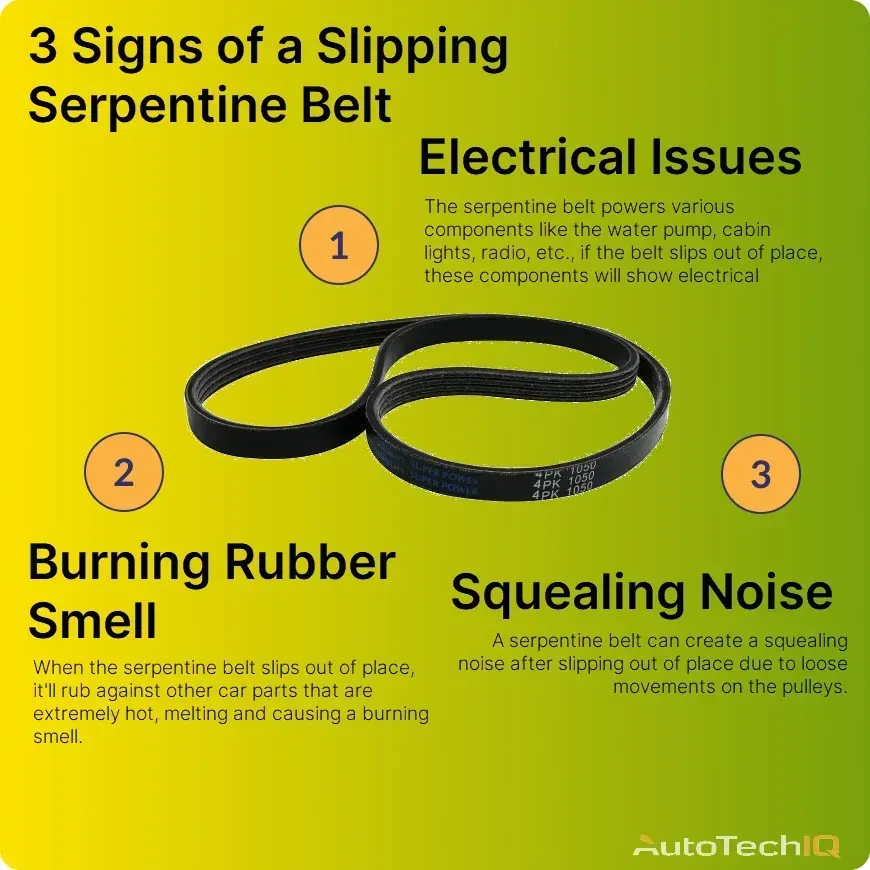
Credit: www.autotechiq.com
Preventing Future Smells
Preventing future serpentine belt burning smells helps keep your car running smoothly. A burning smell often means the belt is slipping or rubbing too much. Regular care avoids damage and costly repairs. Follow simple steps to stop the smell before it starts.
Regular Belt Inspection
Check the serpentine belt often for cracks or wear. Look for shiny spots or frayed edges. These signs show the belt is weak. Replace the belt if you see damage. Regular checks catch problems early and keep the belt working well.
Proper Belt Tension
Make sure the belt is tight but not too tight. A loose belt slips and causes heat and burning smells. A belt too tight can damage parts and wear quickly. Use a tension gauge or have a mechanic adjust it. Correct tension helps the belt last longer.
Avoiding Contamination
Keep oil, coolant, and dirt away from the belt. These substances make the belt slip and break down faster. Clean any spills in the engine area quickly. Avoid spraying chemicals near the belt. Clean belts grip better and stop burning smells.
Scheduled Maintenance
Follow your car’s maintenance schedule for belt checks and replacements. Mechanics can spot hidden issues during routine service. Replacing belts on time prevents slipping and burning smells. Stay on schedule to avoid unexpected problems and keep your car safe.
When To Seek Professional Help
Knowing when to seek professional help for a burning serpentine belt smell is crucial. Some signs mean the issue is more serious and needs expert care. Acting fast can prevent bigger problems and save money on repairs.
Persistent Burning Smell
A burning smell that does not go away after basic checks is a warning. It shows the belt or pulley may be damaged. Continuing to drive can cause belt failure and harm other parts.
Professional mechanics have tools to find hidden damage. They can replace the belt or fix pulleys safely.
Visible Smoke Or Damage
Seeing smoke near the belt area means urgent attention is needed. Smoke can indicate the belt is slipping badly or overheating. Also, visible cracks or fraying on the belt need expert assessment.
Ignoring smoke or damage risks engine damage or fire. A professional can inspect and fix the cause properly.
Unusual Engine Behavior
If the engine shows strange signs like loss of power or strange noises, help is needed. These symptoms may relate to belt problems affecting alternator, power steering, or cooling system.
Experts can diagnose the root cause and prevent breakdowns. Driving with engine issues can lead to costly repairs.
Credit: www.wikihow.com
Frequently Asked Questions
What Does It Mean If My Serpentine Belt Smells Like Burning?
A burning serpentine belt smell indicates belt slipping or friction from a locked pulley. It signals overheating or damage. Stop driving immediately to prevent engine damage or fire. Inspect and replace the belt or faulty components promptly to avoid costly repairs.
Can I Spray Wd-40 On My Serpentine Belt?
Do not spray WD-40 on your serpentine belt. It degrades rubber and causes belt slippage, leading to damage and noise. Use proper belt dressing or replace the belt instead.
Can I Drive My Car If It Smells Like Burning Rubber?
Do not drive if your car smells like burning rubber. Pull over safely, turn off the engine, and seek professional help immediately. The smell indicates overheating, slipping belts, or electrical problems that risk fire or engine damage.
How Do I Fix The Burning Smell In My Car?
Check the serpentine belt for wear or damage and replace if needed. Inspect pulleys for locking or wobble. Avoid driving until fixed to prevent damage.
Conclusion
A burning smell from the serpentine belt signals a problem. Act quickly to avoid further damage. Inspect the belt and pulleys for wear or slipping. Replace worn parts to stop the smell and noise. Regular checks keep your car running smoothly and safely.
Don’t ignore these signs; timely care saves money. Keep your engine healthy and enjoy a safer drive.

2 Comments
Comments are closed.